Ponding
Long Ponds Between Drains
Wide bays deflect between columns and hold water in long ponds. The membrane under them ages faster than the rest. Tapered boards fix the low spots.
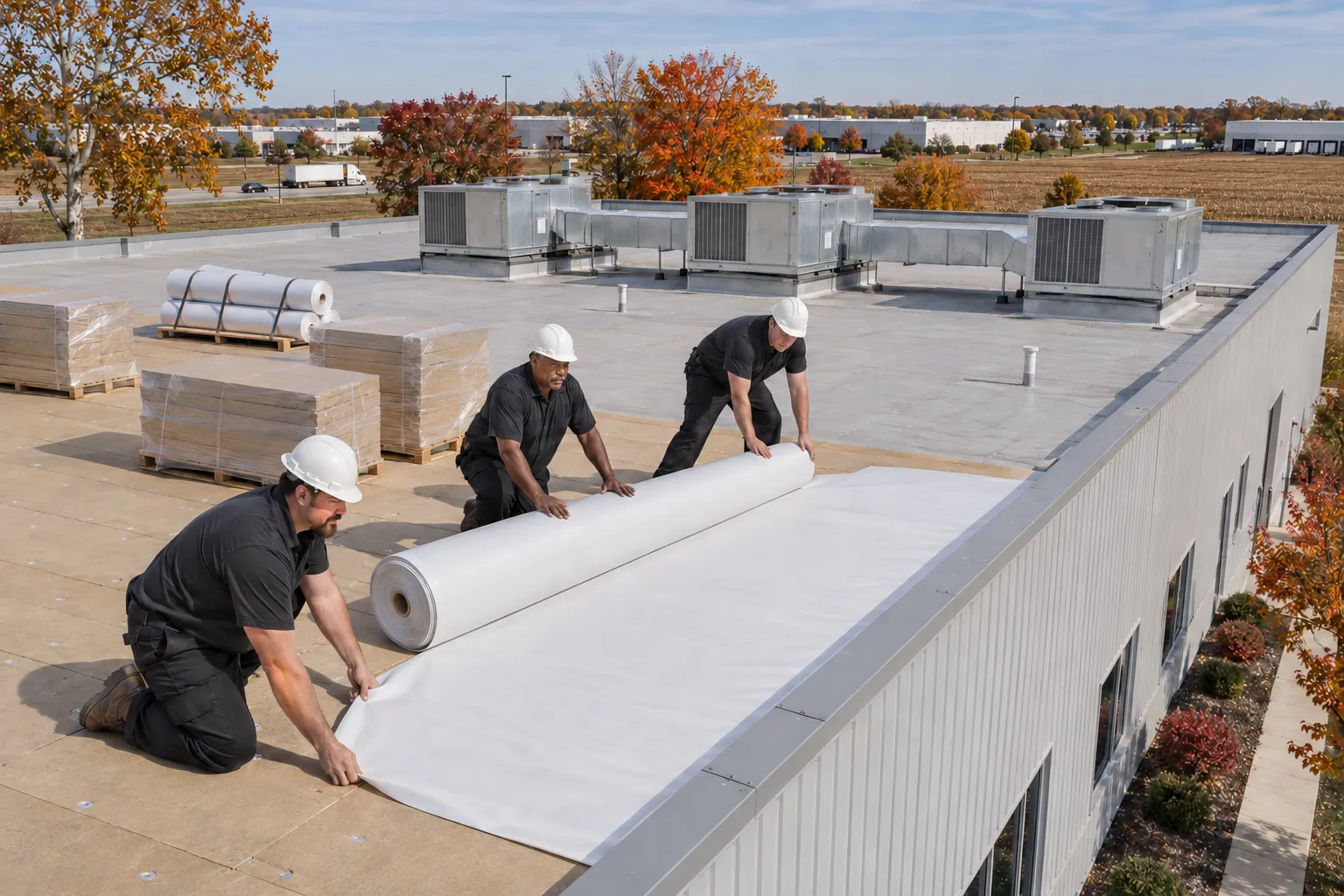
As a Whiteland commercial roofing contractor, we roof distribution centers and warehouses with TPO and EPDM, staging materials so trucks keep moving at the docks.
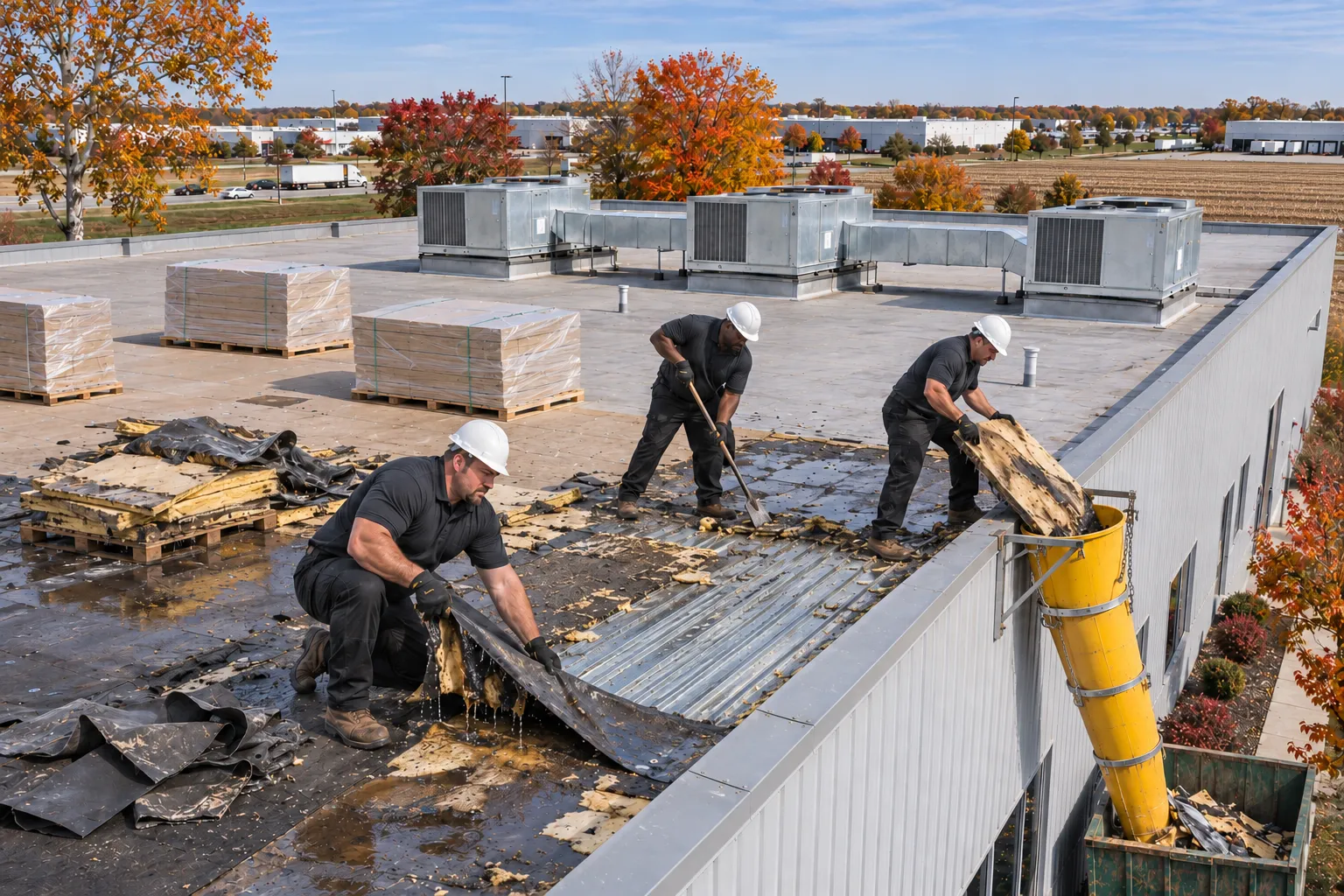
Whiteland commercial roofing on distribution buildings depends on the yard as much as the roof: where trucks turn, which docks run all day, and where a lift can stand.
We stage materials on the quiet side of the building, keep lifts out of truck lanes, and open roof sections in step with your shipping schedule. Peak shipping weeks get lighter roof work, and quieter weeks carry the larger sections.
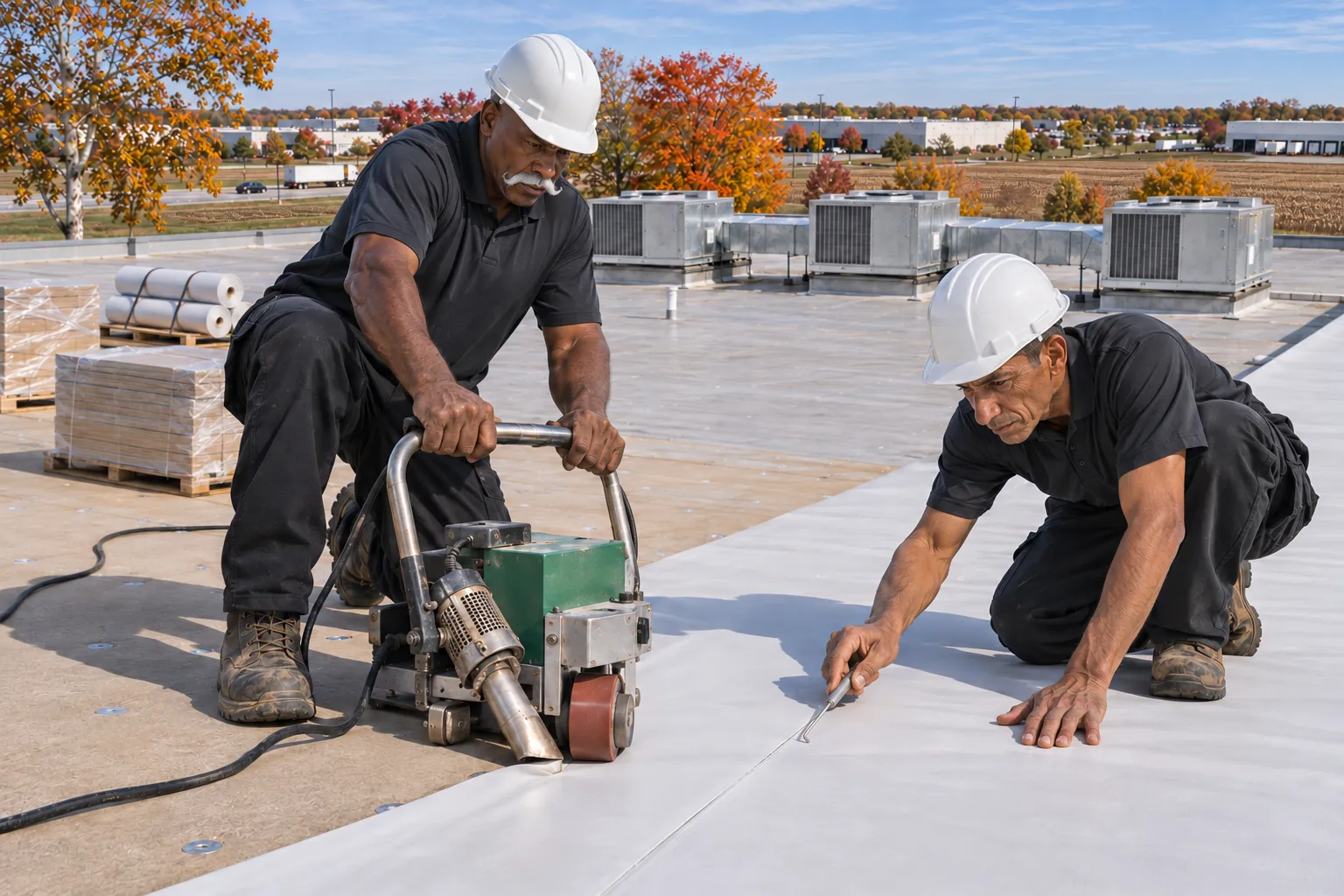
Big warehouse roofs here fail in four predictable ways, and each one shows up on the roof before it reaches the racks below.
Wide bays deflect between columns and hold water in long ponds. The membrane under them ages faster than the rest. Tapered boards fix the low spots.
Mechanically attached sheets flutter in storms. Over the years plates loosen and push up through the membrane. Fully adhered sheets avoid the problem.
Dark roofs over racked inventory turn the upper storage levels hot in summer. Reflective membrane cuts that heat at the deck. White TPO cuts the heat at the deck.
Leaves and loose gravel collect at drain bowls. One clogged drain can flood a bay after a heavy storm. Regular drain checks keep bays from flooding.
Six checks on every distribution and warehouse roof before pricing.
Each drain gets cleared and flushed, and we follow ponding stains to see which bays drain slowly between storms.
On attached roofs, plates that push up through the sheet mark spots where wind has worked the fasteners loose.
Dirt rings show where water sits between columns. Their size sets how much tapered insulation the new roof needs.
Edge metal above dock doors takes wind and truck spray. Loose edges there are checked closely, since water lands on loading areas.
A moisture grid across each bay marks wet boards, so recover can go over dry areas while wet bays are stripped.
We walk the truck court and note which docks run all day, where roof lifts can stand, and where dumpsters stay out of the way.
On a distribution building, a new roof protects stock and keeps docks running.
Sealed laps and drains stop drips onto pallets and cartons, saving damaged goods and cleanup between trucks.
White TPO reflects summer sun, so the top racks under the deck stay cooler through July and August.
Sloped insulation between drains ends the long ponds that form across wide bays after every rain.
Staging on the quiet side of the building and timed sections keep loading on schedule while the roof goes on.
These systems cover the distribution and warehouse roofs we work on.
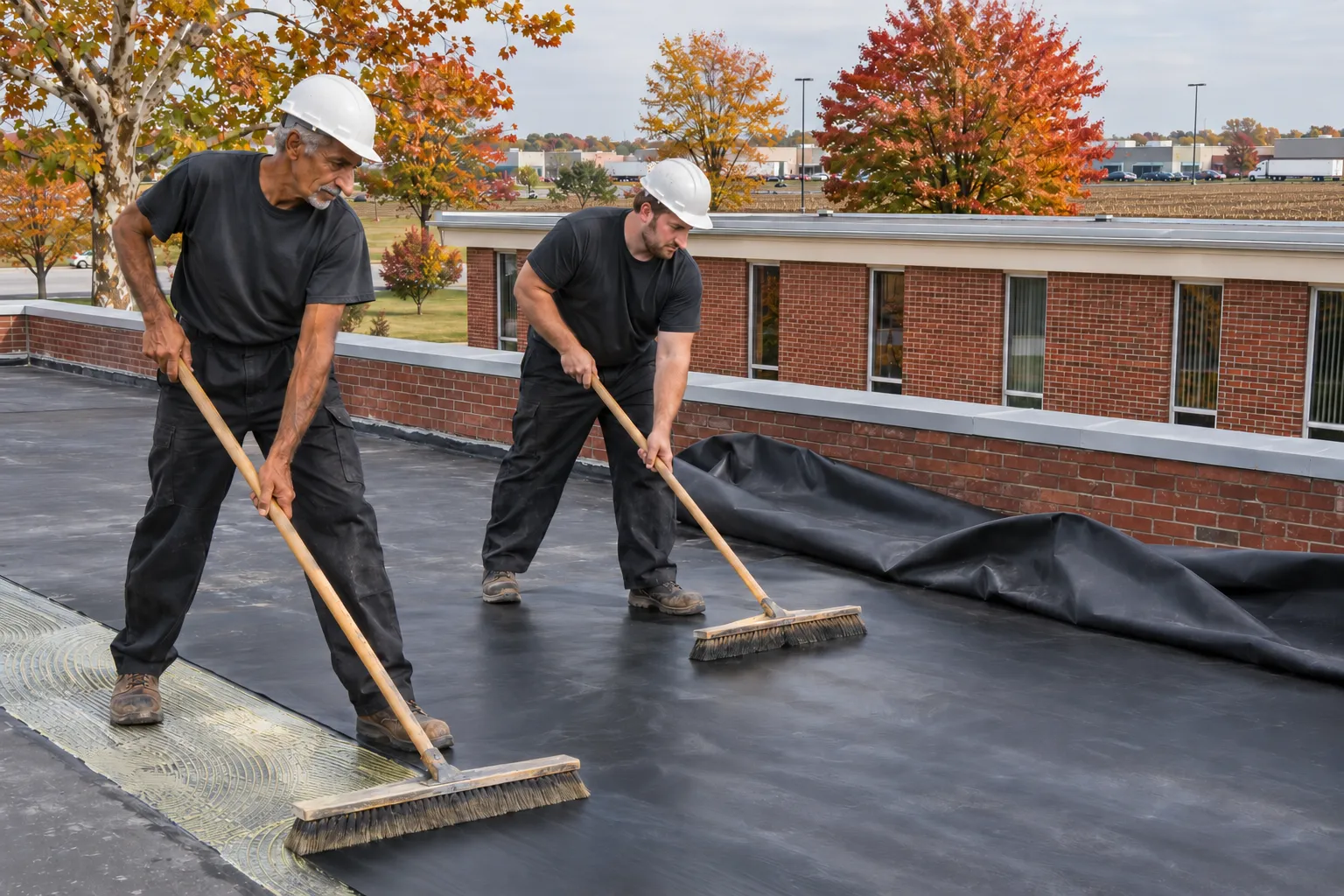
Plant roofing for warehouses with processing or packaging lines.
Industrial Roofing details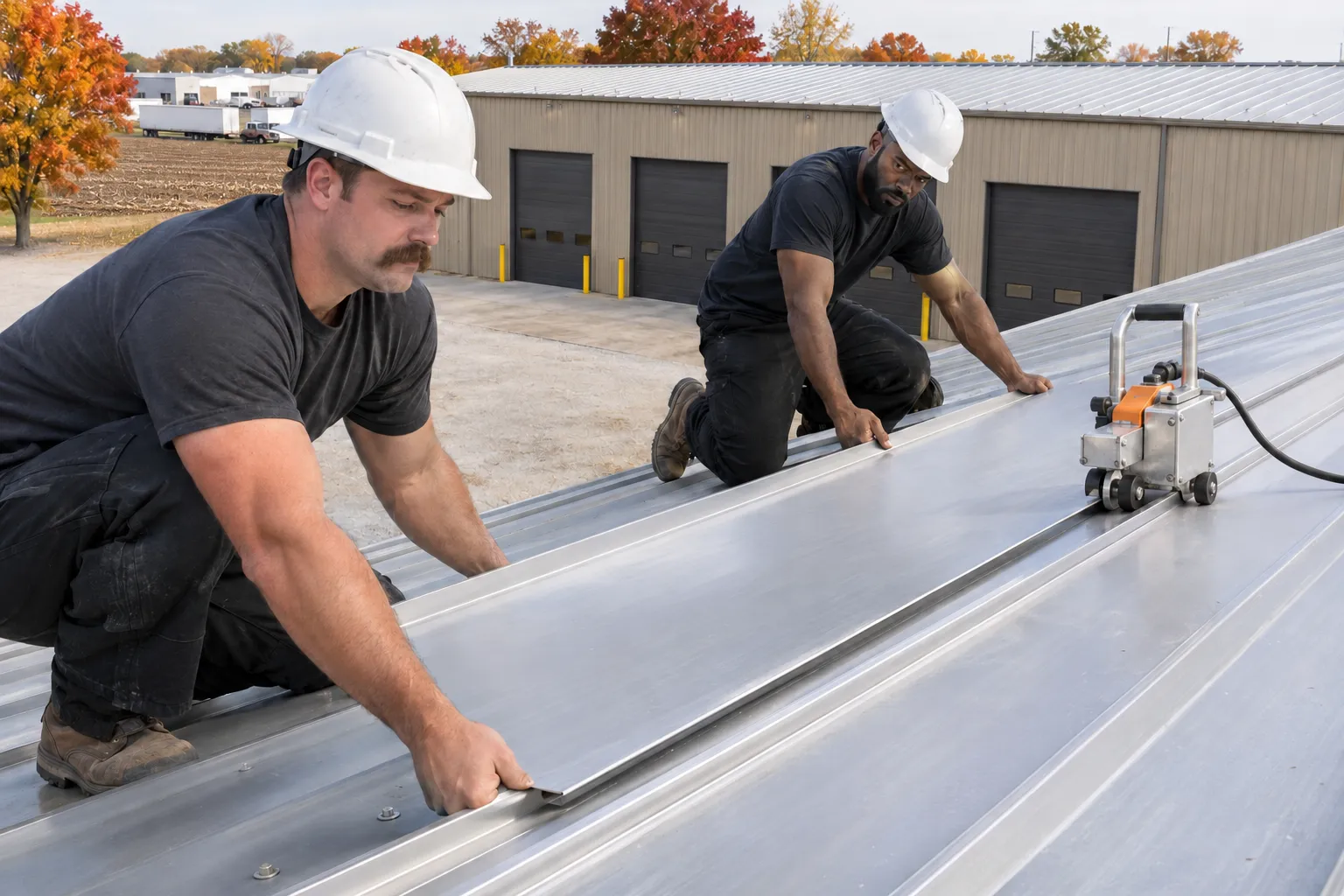
Metal panels for sloped warehouse additions and office fronts.
Commercial Metal Roofing detailsTell us which aisle and which dock. We trace the drip to the lap or drain above and schedule repair around your shipping hours.
Five decisions set around trucks and docks.
We walk every bay, read moisture on a grid, and check drains, fastener plates, and ponding lines before writing a scope. Photos of each bay go into the estimate.
Dry insulation lets new membrane go over a recover board. Wet bays get stripped to the deck and rebuilt. Dry bays and wet bays are priced as separate lines.
TPO or EPDM is matched to heat and traffic, and tapered boards are laid out to move water between drains. The drain layout drives where each tapered panel goes.
Lifts and dumpsters go on the quiet side, chutes stay off active docks, and roof sections follow your shipping calendar. Shift changes at the docks set the lift schedule.
Drains are flushed and tested, then we walk the finished roof with your facility manager and note any equipment changes. Drain locations and pad routes go into your records.
These towns are part of our area too. Outside them, call us or send us a message and we will tell you if we can help.
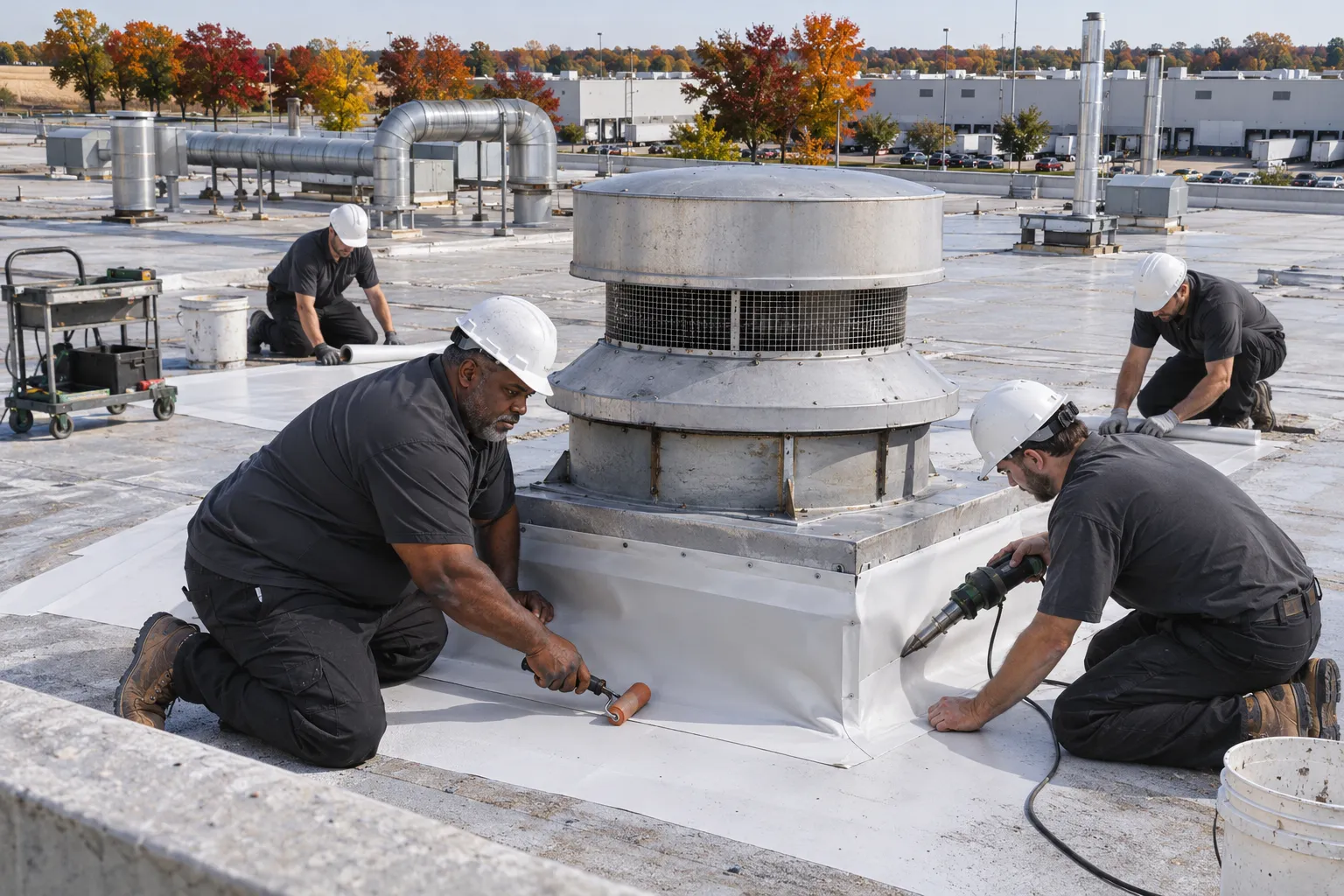
Plant roofs flashed around stacks and makeup-air units.
Roofs where core cuts decide recover or tear-off.
Metal shops with screw leaks and condensation sorted out.
Retail strip roofs replaced one tenant at a time.
Answers for warehouse and distribution owners here.
Cost
Roof area leads on big warehouses, followed by insulation, tear-off, and drain work. Staging around docks and lift time add to the total. Drain work and tapered boards often decide the final figure.
On wide bays with long ponds, yes. It moves water to drains and adds insulating value at the same time. Long ponds between columns are where it pays off most.
Finding Us
We cover Whiteland for warehouse inspections and replacement. Send the building address and the docks you need open. Tell us the shipping peaks so the walk plan avoids them.
Distribution centers, warehouses, and light industrial buildings with large low-slope roofs. Mezzanine offices on the same building are covered too.
Operations
Rarely. We stage on the quiet side, keep lifts out of lanes, and time sections to your shipping peaks. Lifts are set before trucks start running in the morning.
Fastened TPO goes on in cold weather once the deck is dry. Adhered systems wait for milder days. Cold-weather work keeps stock under a closed roof each night.
Share the warehouse address in Whiteland and the docks that must stay open. We walk the roof and price a staged replacement.