Exhaust
Residue Around Process Stacks
Oil mist and fumes settle on the membrane near stacks. The sheet softens or cracks in a ring around each one while the open field looks fine.
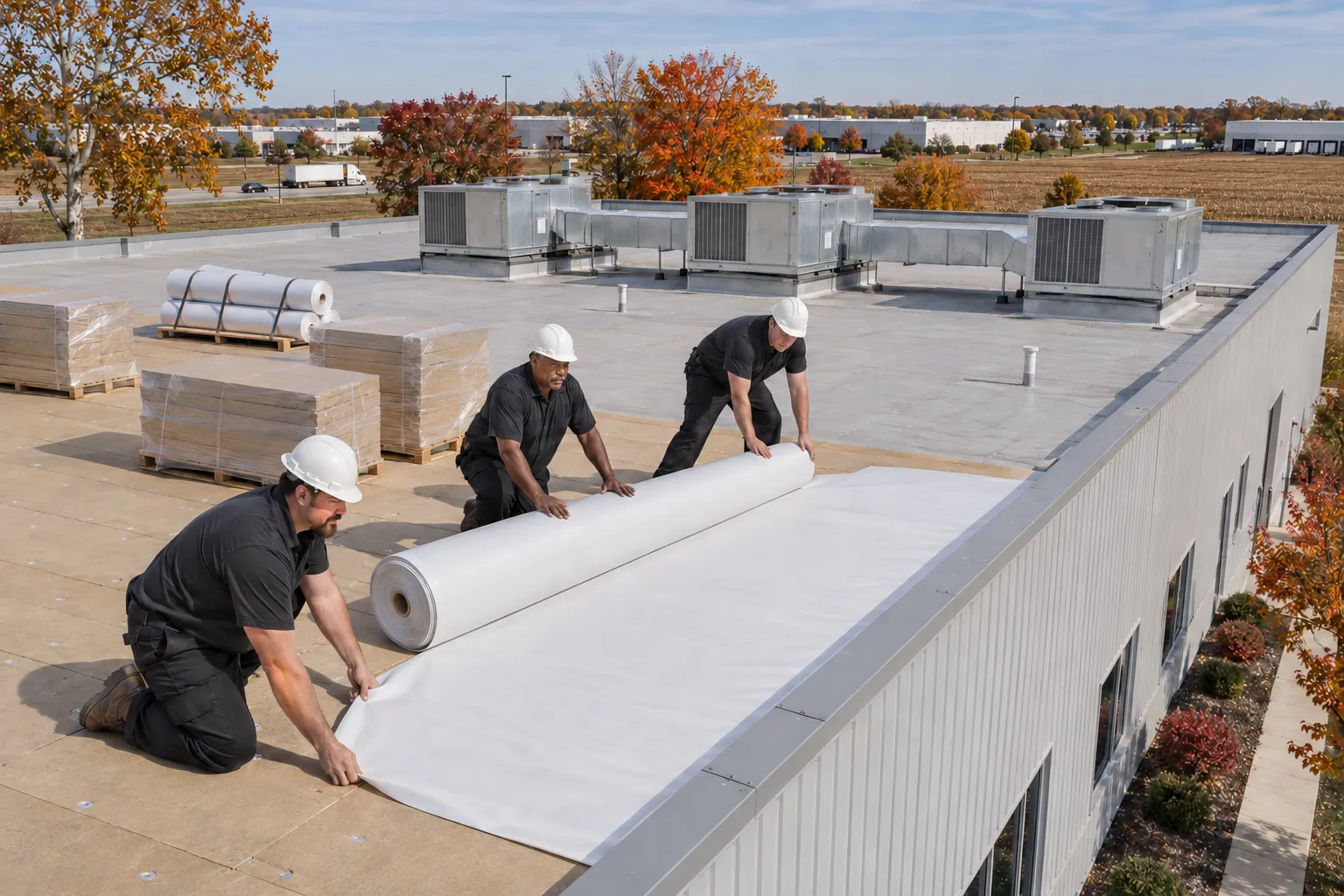
As a Franklin commercial roofing contractor, we install TPO, EPDM, and metal roofs on plants, shops, and offices, mapping each exhaust and curb before material is ordered.
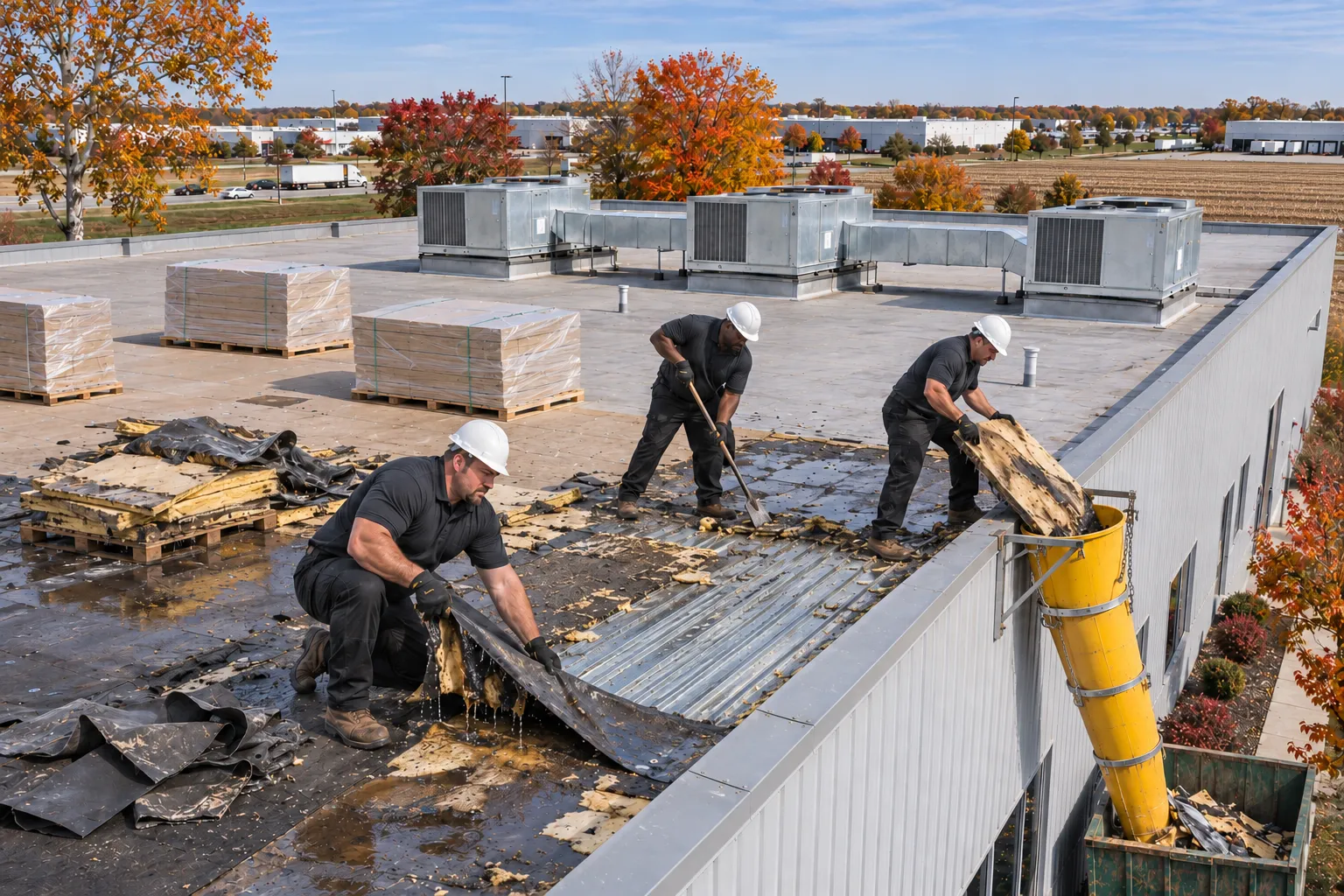
Franklin commercial roofing jobs on manufacturing buildings start with the roof penetrations, because exhaust stacks, makeup-air units, and process vents decide which membrane and flashing the roof needs.
We walk the roof with your maintenance lead, note what each stack carries, and plan sections so the floor below stays covered at the end of every shift.
Plant and shop roofs here show four problems again and again.
Oil mist and fumes settle on the membrane near stacks. The sheet softens or cracks in a ring around each one while the open field looks fine.
Layers of mastic on curb corners hold water against the flashing. Each new patch buys a season and then the drip returns over the line.
Spent filters and dust from rooftop units wash to the drain bowl. Water backs up across the bay and finds every weak lap nearby.
Repeated punctures along service routes let water into the insulation. Core cuts along those paths show how far the wet area runs.
Six checks shape every plant and shop roof estimate we write in Franklin.
We look at the membrane in a ring around each exhaust stack for softening and cracks, then note what that stack vents so the replacement sheet matches the exposure.
Big units sit on tall curbs with years of mastic on the corners. We peel back a patch to see whether the flashing beneath is still attached.
Filters and dust from rooftop units end up at the drains. Each bowl gets cleared and the ponding lines around it measured to plan tapered boards.
Moisture readings run bay by bay, so a phased plan can start with the wettest areas over the most sensitive lines.
From the plant floor we look up at the deck for rust stains and sag, which tell us whether tear-off will expose damage that needs new steel.
Hatches, ladders, and crane spots decide how material reaches the roof without crossing production aisles or blocking forklift routes.
A new roof over a working plant protects people, equipment, and product.
Sealed stack and curb flashing stops drips over conveyors, panels, and stock, so maintenance stops chasing buckets after storms.
Around stacks that vent oil or chemicals, a residue-rated sheet keeps the roof from breaking down where process air lands.
Walkway pads mark the path to each unit. Technicians stay on them, and the membrane between paths sees far less wear.
Reset drains and tapered insulation move water off wide bays before it can pond, freeze, and lift laps in January.
Four systems cover the plants, shops, and offices we roof in Franklin.
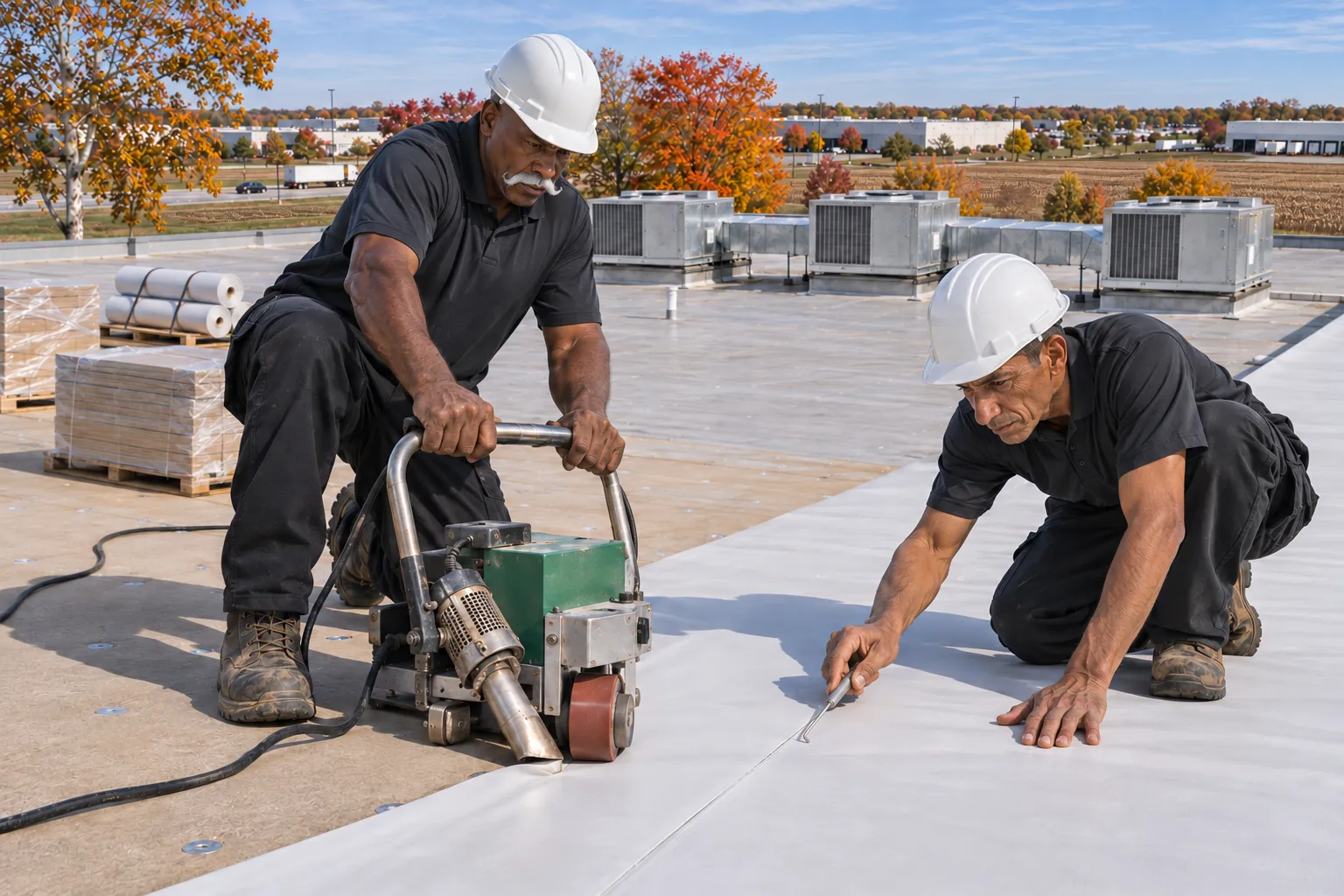
Welded white membrane for equipment-heavy roofs over hot production space.
TPO Roofing details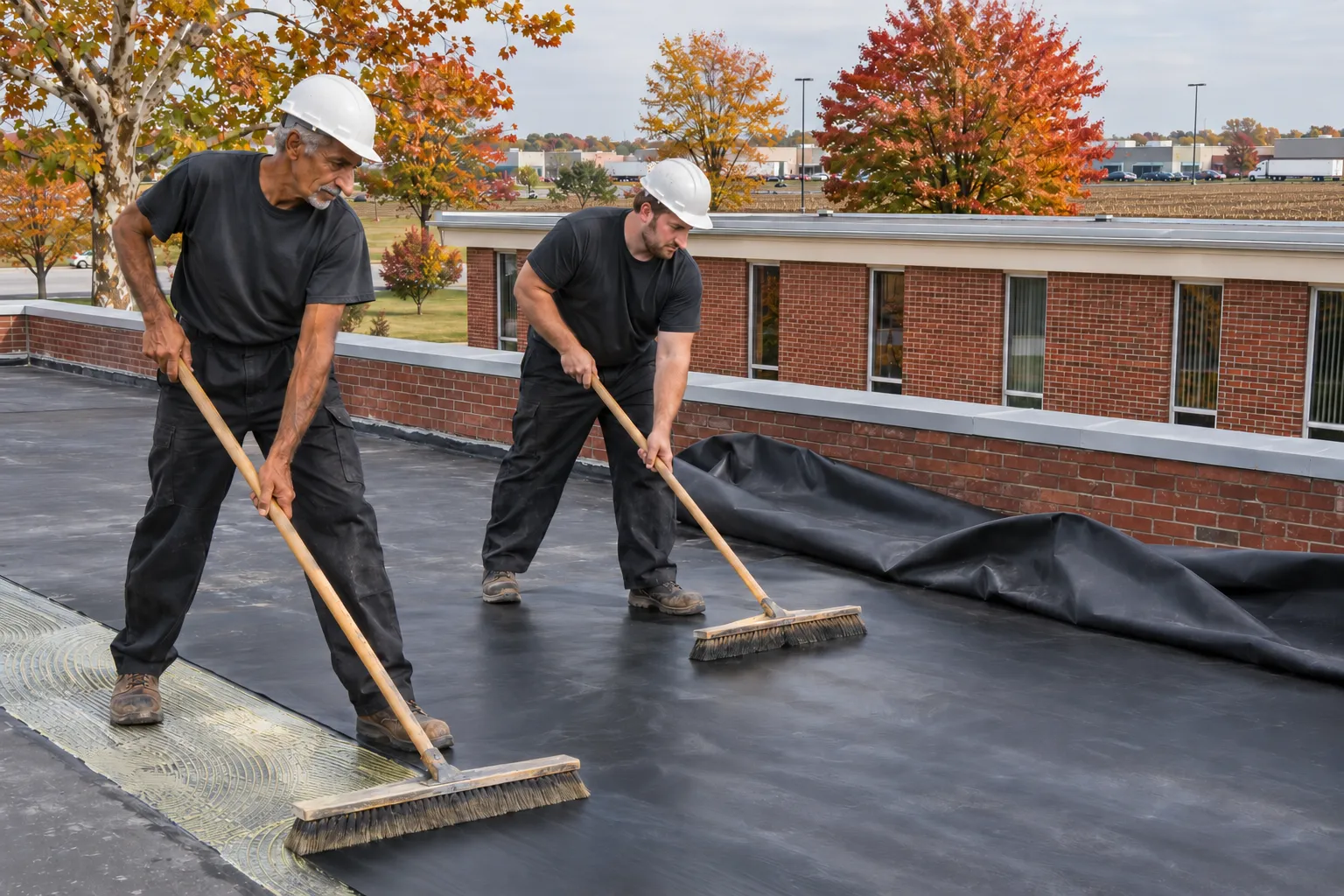
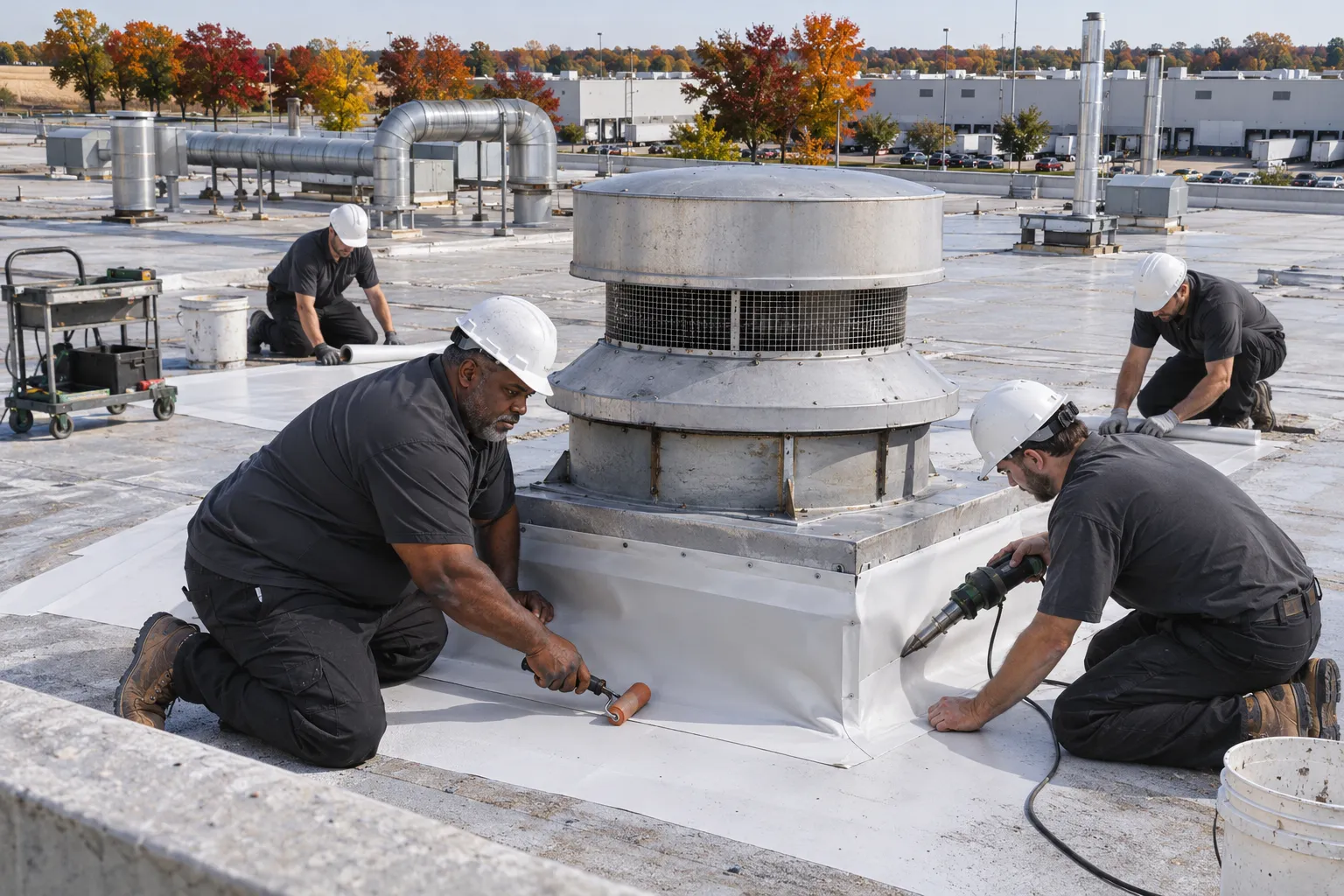
Phased plant roofing with exhaust-rated membrane near stacks.
Industrial Roofing details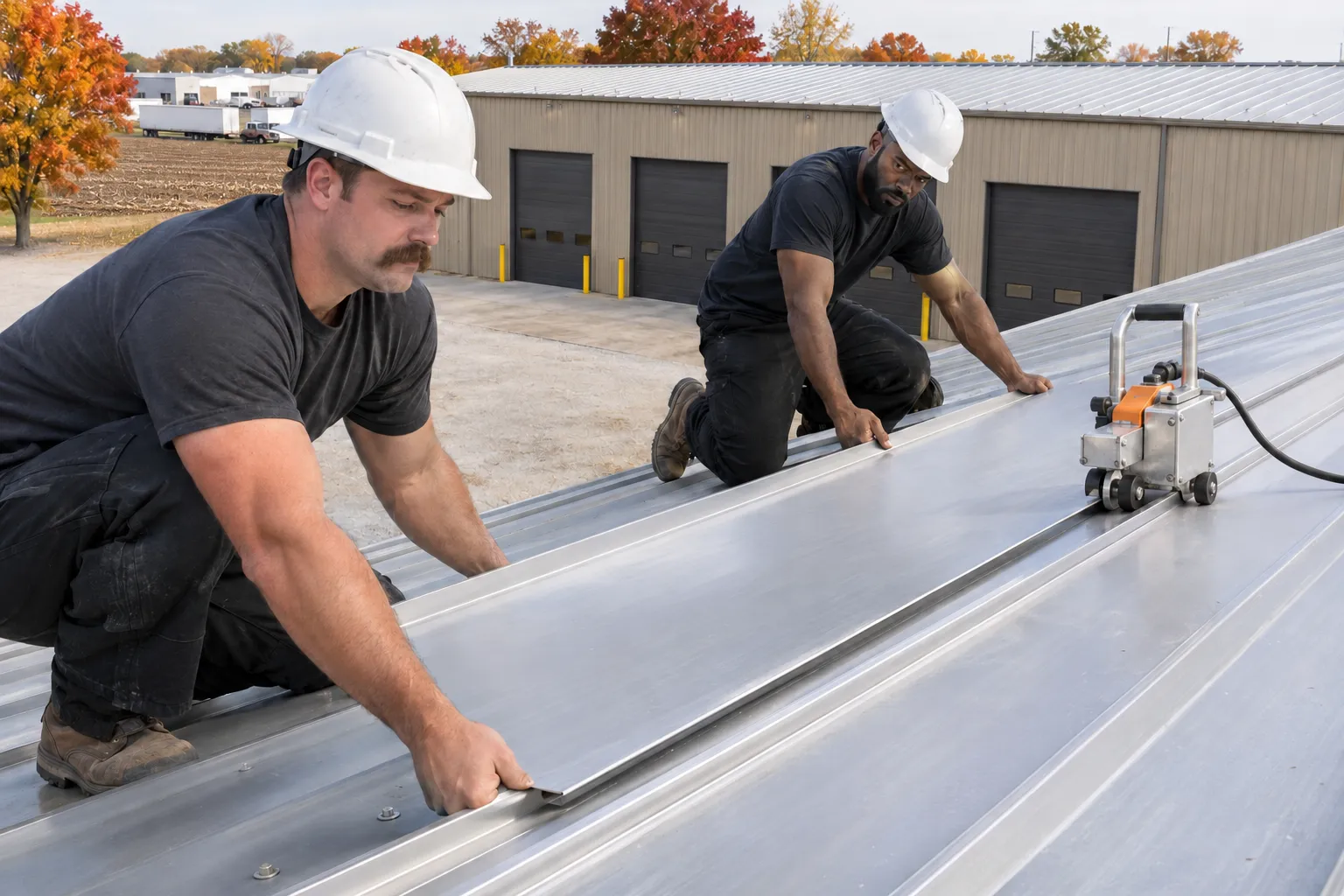
Standing-seam panels for pre-engineered shop and plant buildings.
Commercial Metal Roofing detailsCall with the bay and the time the drip started. We trace it to the stack, curb, or lap above and plan the fix around your shifts.
Five decisions take a plant roof from survey to final walk.
We log every penetration, read moisture across each bay, and cut cores where readings run high. Your maintenance lead sees the photos before we price anything.
One wet bay can be cut out and rebuilt. Wet boards spread across the plant, or a rusted deck, call for a phased tear-off.
Process air sets the choice. A residue-rated sheet rings the stacks, and standard TPO or EPDM covers the open field.
Tear-off over sensitive lines happens during planned downtime, and debris controls hang below each open roof section.
Walkway pads go down along service routes, drains are cleared and tested, and maintenance walks the finished roof with us.
We also replace commercial roofs in these towns. Outside them? Please call us or send us a message and tell us where the building is.
Offices and stores choosing a membrane after a moisture survey of the old roof.
Metal shops and farm buildings, including panels set on framing over flat roofs.
Storefront strips roofed in phases with tenants told the schedule ahead.
Warehouses where truck courts and dock doors decide how materials reach the roof.
What Franklin owners ask us most often.
Cost
Roof area, system, insulation, and tear-off lead the price. Plant roofs add stack flashing, crane time, and phasing around production, which is why every price follows a roof walk. Phased work also lets the budget follow the leak history.
Yes. We rank bays by leak history and moisture, then price them as separate phases with clean tie-ins between new and old roof. Tie-ins are checked at each phase so seams stay watertight.
Businesses
Manufacturing plants, shops, warehouses, and offices. Each gets TPO, EPDM, or metal based on slope, traffic, and what vents through the roof. Plant roofs often pair TPO over production with EPDM on offices.
Yes. Office wings get daytime work with entrances protected, and noisy tear-off is scheduled around meetings when you ask. Loud tear-off is booked away from meetings and calls when needed.
Hiring
Look for a roofer who inspects before quoting, names the system and flashing in writing, and plans with your safety staff for plant work. Ask how they close each section before a shift change.
Ask the local building department before work begins. We size the scope so the permit description matches the tear-off and structural work. Permit questions get answered before materials are ordered.
Give us the plant or shop address in Franklin. We map the roof and penetrations and price a system matched to the building.