Units
Leaks at Each Tenant Unit
Every storefront has its own rooftop unit, and each curb is a leak point. Water shows up on a sales floor right under the unit. New curb flashing per tenant ends it.

As a New Whiteland commercial roofing contractor, we replace roofs on retail strips and offices in phases, telling tenants the schedule and keeping entrances clear.
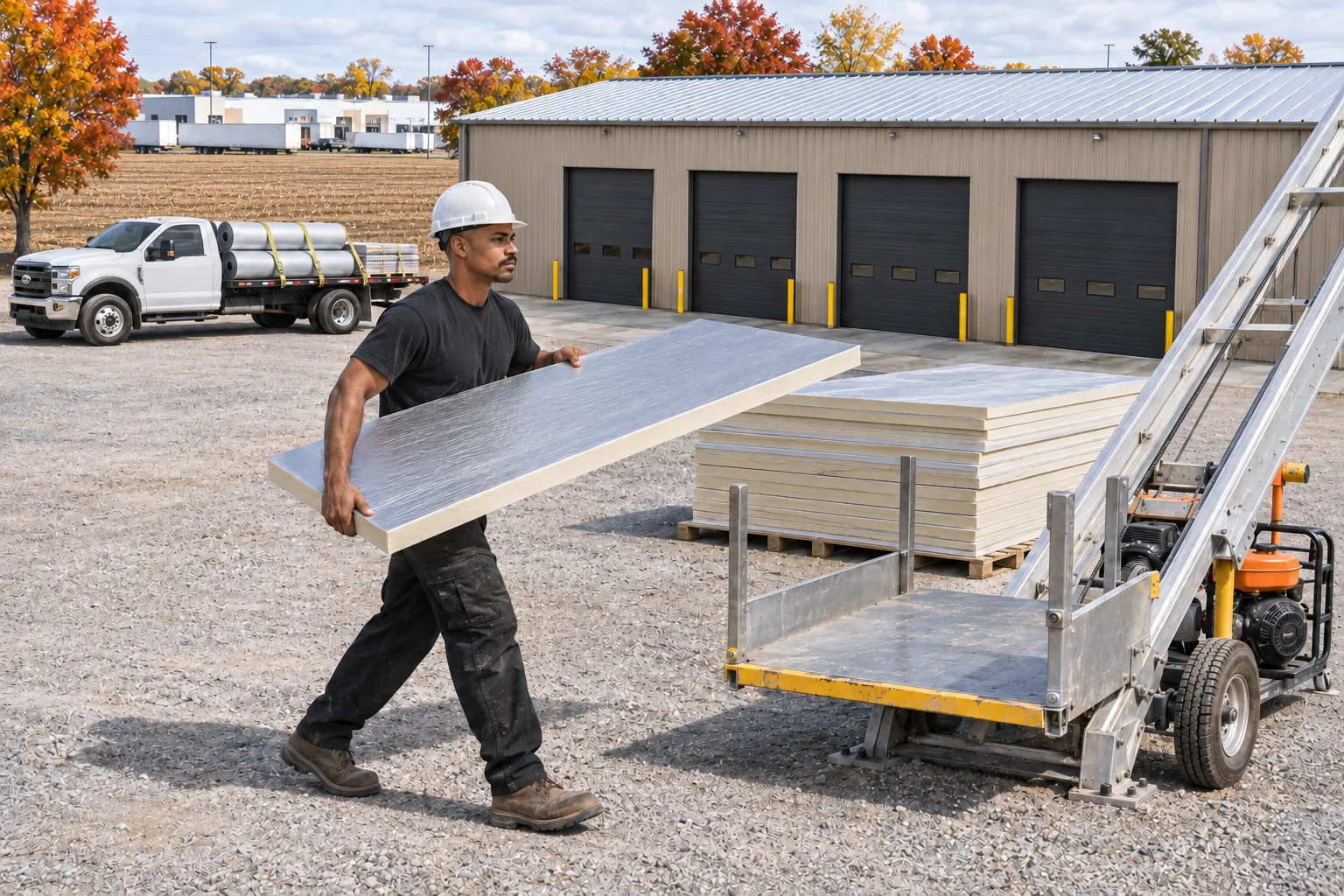
New Whiteland commercial roofing on retail and office buildings is mostly a scheduling job: which tenant space sits under each section, when they open, and where shoppers park.
We split the roof by tenant, post the order of work ahead of time, and keep debris chutes and lifts away from storefront doors. Your property manager gets the same schedule to share with each tenant before work begins.
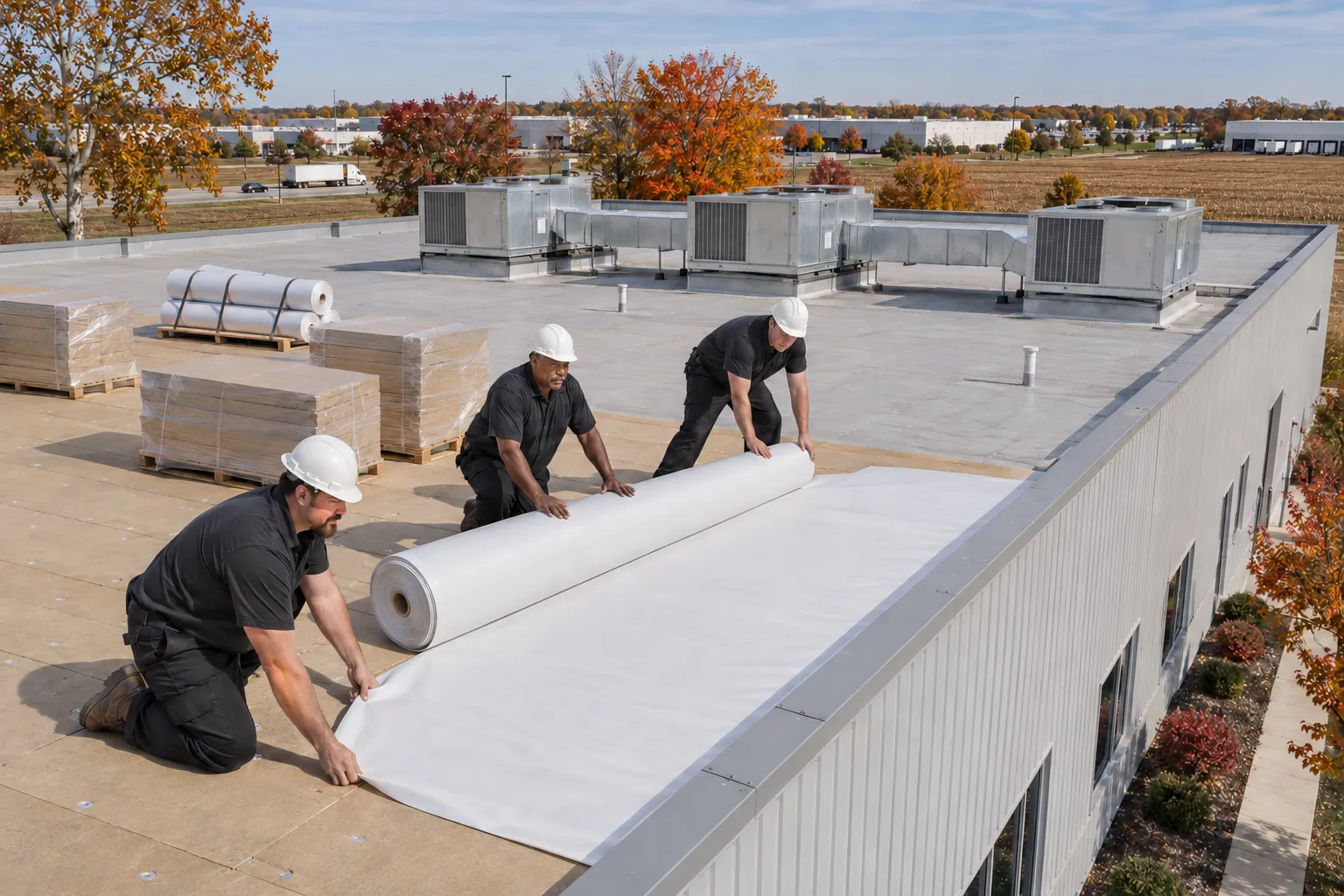
Retail and office roofs here show four common problems.
Every storefront has its own rooftop unit, and each curb is a leak point. Water shows up on a sales floor right under the unit. New curb flashing per tenant ends it.
Strips step up and down where tenant walls meet. Flashing at those steps cracks and lets water into two spaces. Fresh step flashing seals both spaces.
Water from the roof edge and coping runs down inside storefront walls, staining ceilings near the glass. New coping joints keep it out of the wall.
Technicians all climb through the same roof hatch. The membrane around it wears thin and punctures first. Walkway pads take that wear instead.
Six checks run tenant by tenant across every strip we price.
Each storefront unit sits on its own curb. We test the flashing at every one and match leaks inside the space to the unit above.
Where tenant roofs step up or down, flashing cracks and water crosses into the next space. These steps get close attention.
Coping along the storefront wall leaks into window heads. We check joints and fasteners along the whole front edge.
The membrane around the roof hatch takes every technician visit. Wear there tells us where walkway pads belong.
Back-of-building scuppers and downspouts clog with debris. Water backing up behind them soaks the rear tenant walls.
Opening times and delivery windows for each tenant get written down during the walk so the roof work schedule fits every space.
A planned roof replacement protects the building and keeps business going underneath.
Section-by-section roof work, posted ahead, lets each store plan around a short window instead of closing for the job.
Every tenant curb gets new flashing tied into the new membrane, so each space has a sealed roof above its unit.
New flashing at the steps between tenant roofs stops water from crossing into the space next door.
Walkway pads from the hatch to each unit protect the paths technicians use for every service call.
These four systems cover the strips and offices we roof here.
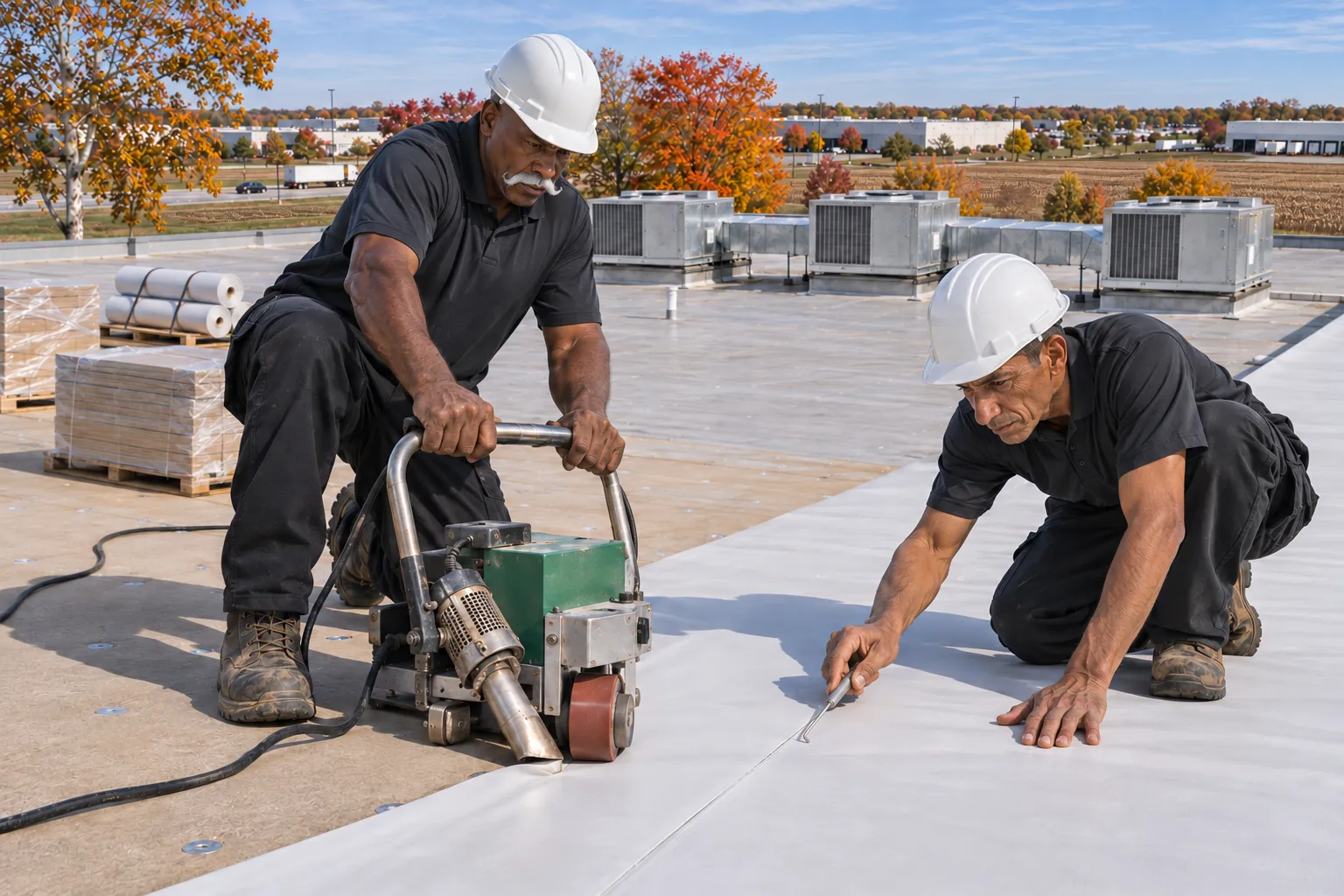
White welded roofs for strips with many tenant units and cooling loads.
TPO Roofing details
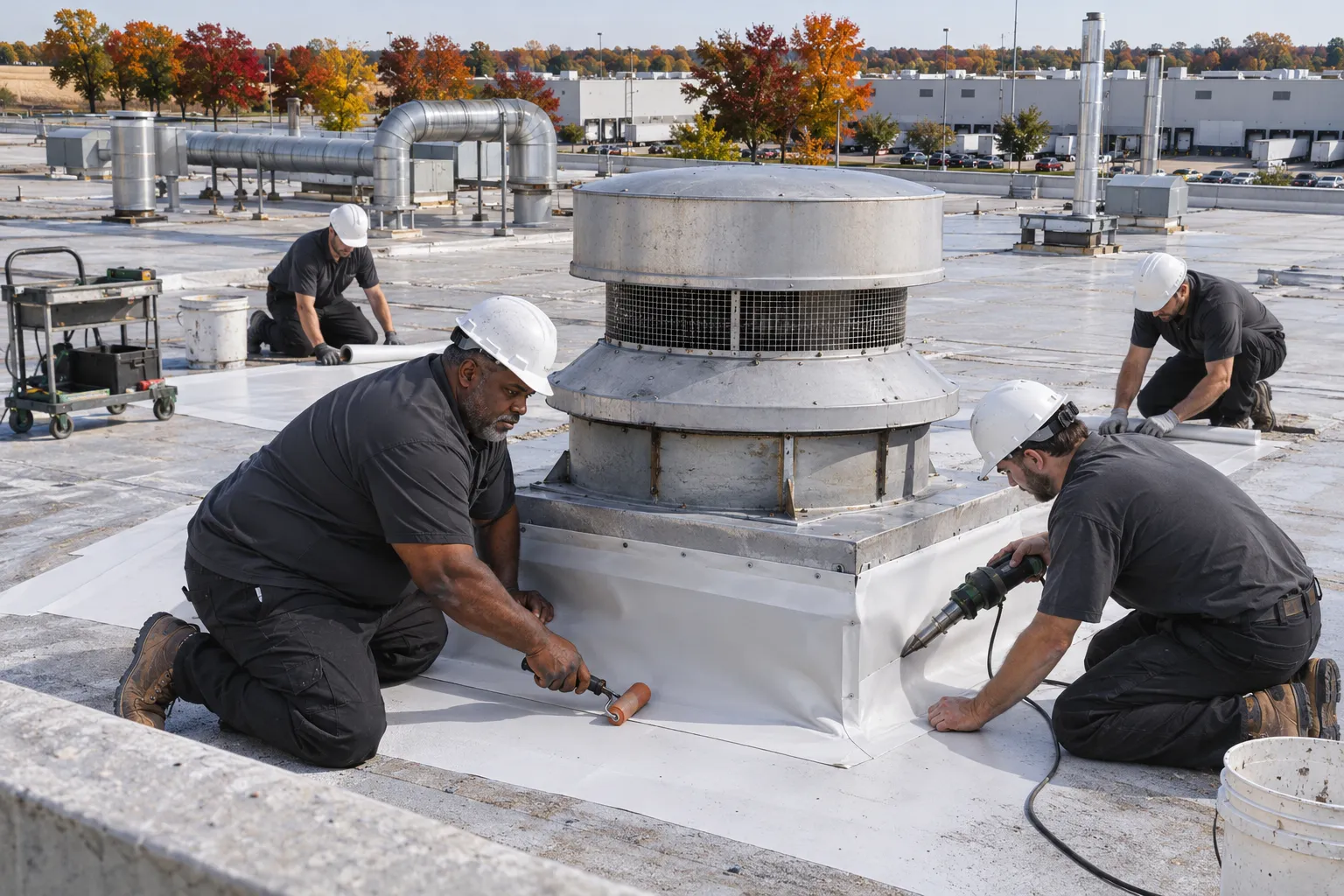
Plant roofing where a light industrial tenant has process exhaust.
Industrial Roofing details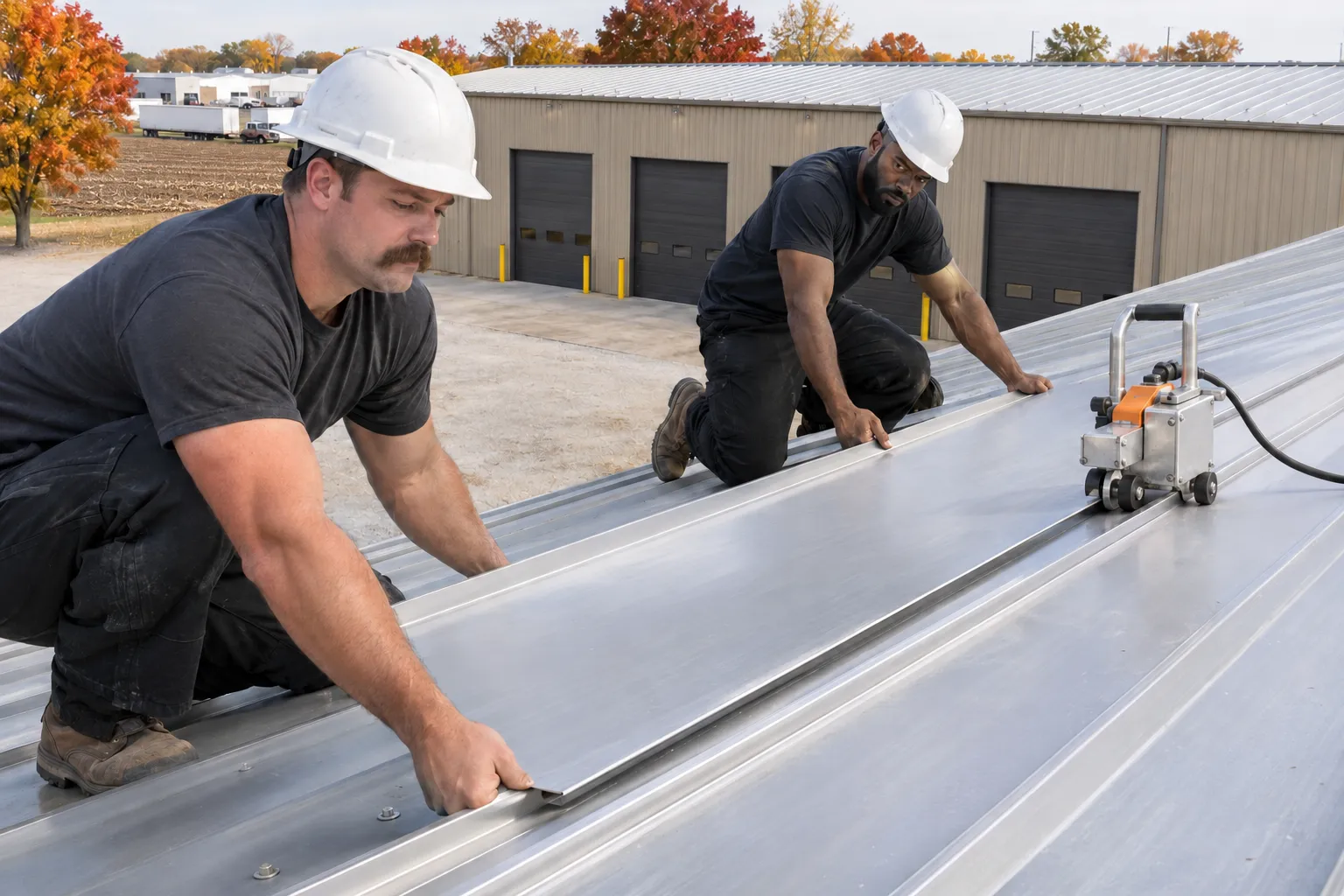
Metal panels for sloped storefront sections and retrofit over flat roofs.
Commercial Metal Roofing detailsTell us which unit and which corner of the space. We find the curb or wall step letting water in and plan work around store hours.
Five decisions, built around tenants and parking.
We walk each tenant section, test curb flashing, check party-wall steps, and note where water shows inside each space. Leak locations reported by tenants guide where we start.
A single failing section can be replaced alone. Leaks across several tenants and wet insulation point to the full roof. Testing tells us whether neighboring sections are dry.
TPO, EPDM, or metal gets chosen first, then the order of tenant roof sections is set and shared with your property manager. Tenants with early openings go first in the sequence.
Noisy tear-off runs early, chutes stay away from doors, and each roof section closes before stores fill up in the evening. Parking near the work zone is coned off ahead of time.
Your property manager joins us at the end to review each tenant unit, the party-wall flashing, and the hatch pads. Each tenant gets a note when work above them is done.
We work in these towns as well. For a building elsewhere, call us or send us a message to check.
Plant roofs where stacks and fans are logged before membrane is chosen.
Warehouse and office roofs priced after layer and moisture tests.
Metal shops checked for leaks and condensation in one visit.
Distribution roofs worked in sections around truck traffic.
Questions from property managers and owners here.
Businesses
Roof replacement and new systems on retail strips, offices, and light industrial spaces, using TPO, EPDM, or metal to suit the slope and use. Metal panels suit sloped storefront sections with mansards.
Rarely. Sections are timed to each tenant, entrances stay clear, and loud work runs early before customers arrive. Tenants hear the schedule before their section opens.
Hiring
Look for a written tenant-by-tenant plan, a scope that names the system, and a contractor who walks each space before pricing. Ask for references to tenant-by-tenant phasing on past jobs.
We cover New Whiteland for inspections and replacement. Send the property address and the tenants affected. Include which tenants report leaks so the walk starts there.
Leases
The lease decides. Many leave the roof to the owner, with tenants covering units, but terms vary, so check yours. Your lease and your attorney settle who pays for what.
Yes, when the rest of the roof tests dry. The new section ties into the old roof at clean seams. Clean tie-ins keep the old and new roofs watertight.
Send the address of the strip or office building in New Whiteland. We walk each tenant section and price a phased roof plan.