Layers
Two Roofs Already on the Deck
A second layer added years ago hides wet boards underneath. Code limits on roof layers mean both come off before anything new goes down. Cores show exactly how deep the wet goes.

As a Shelbyville commercial roofing contractor, we replace roofs on warehouses, offices, and stores, testing the old layers first to decide between recover and tear-off.
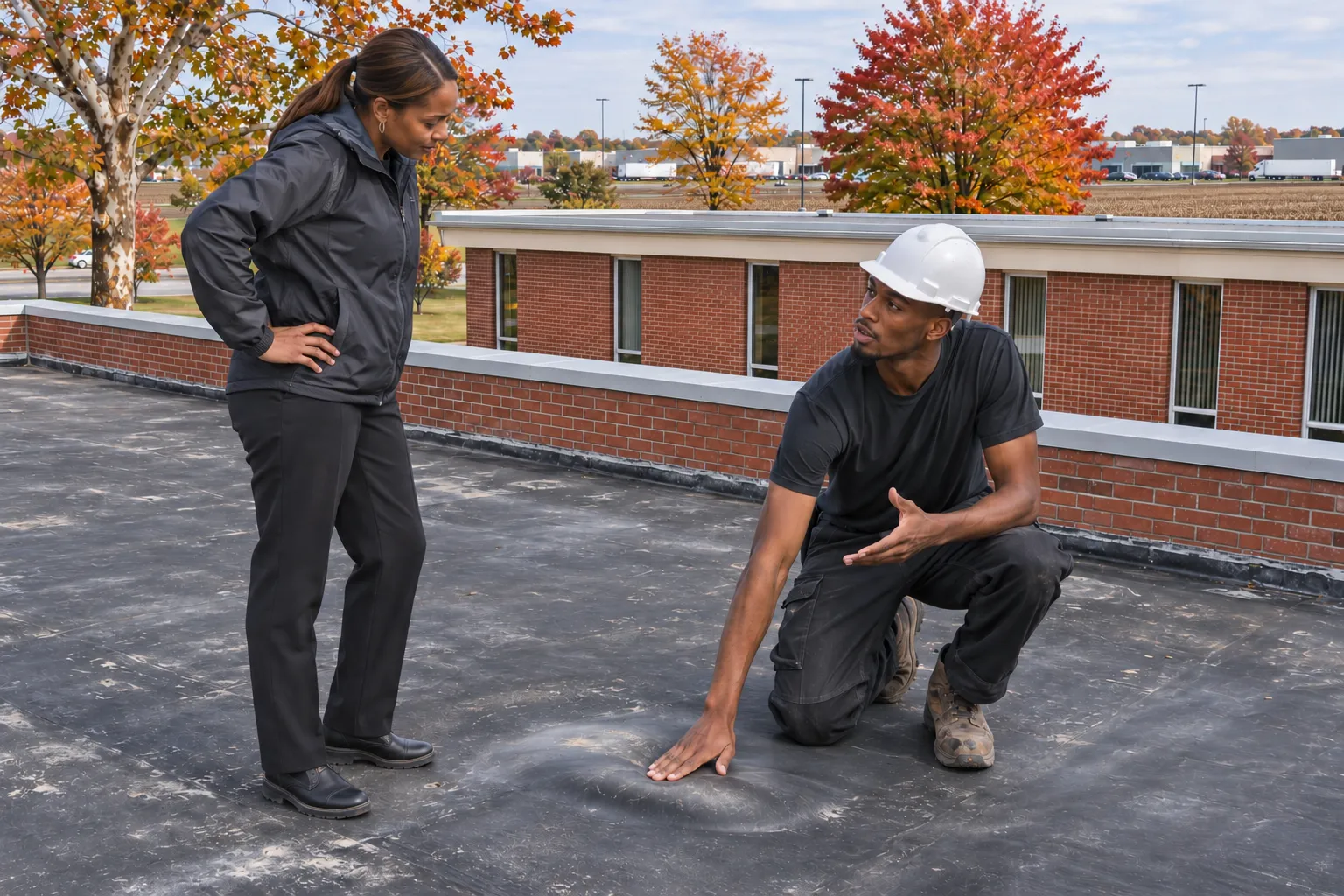
Shelbyville commercial roofing decisions hinge on what sits under the current membrane: how many layers, whether the insulation is dry, and whether the deck is solid.
Core cuts and a moisture survey answer those questions. A dry single layer can take a recover board and new TPO or EPDM; wet boards or a second layer come off first.
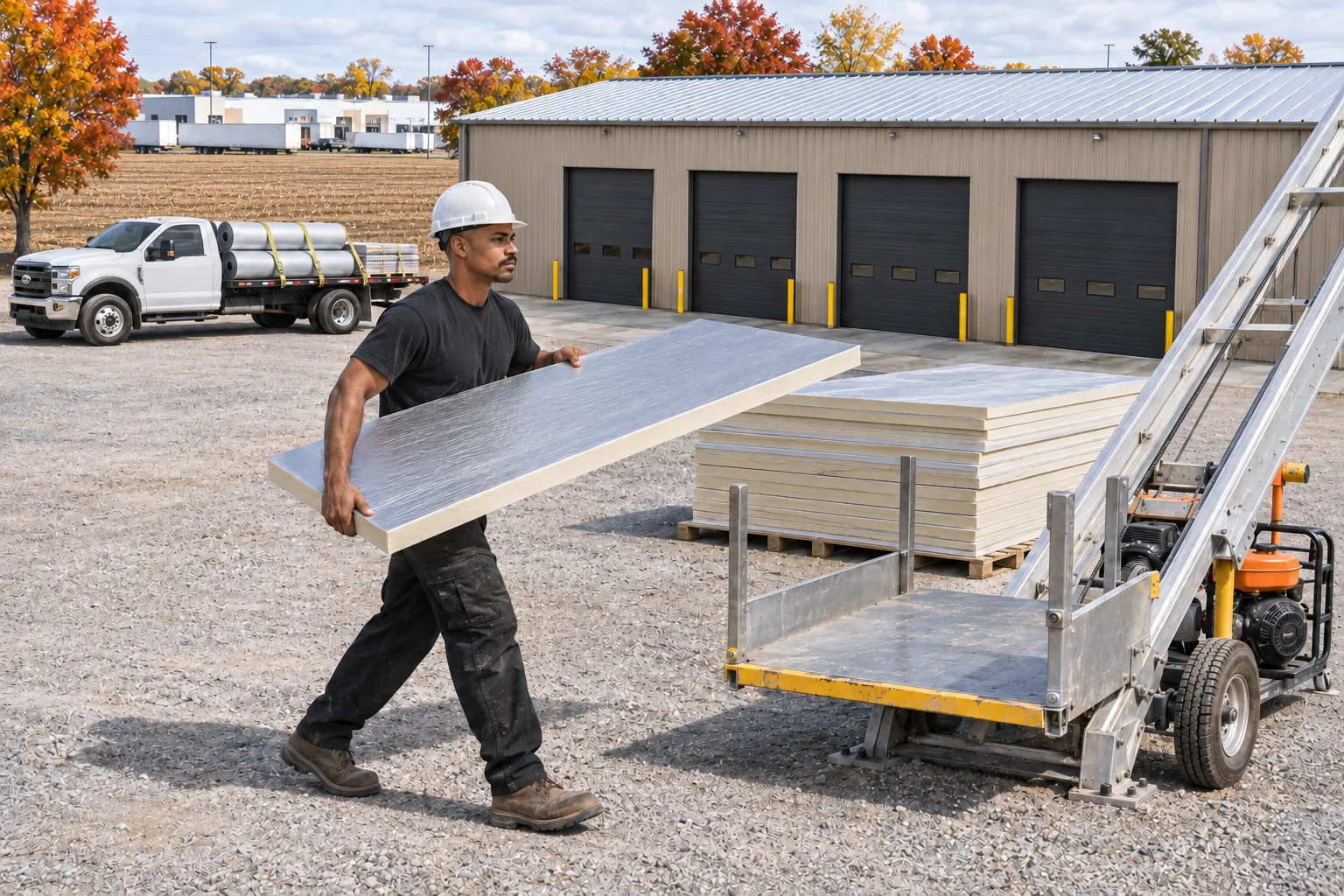
Four conditions show up most on the warehouse, office, and retail roofs we test here.
A second layer added years ago hides wet boards underneath. Code limits on roof layers mean both come off before anything new goes down. Cores show exactly how deep the wet goes.
The surface looks fine while insulation below holds water from an old leak. Soft spots underfoot are the clue, and cores confirm it. A moisture grid marks the full extent.
Adhesive seams on older rubber roofs dry and lift. Water runs along each open lap and stains ceiling tile far from the gap. Long open runs point toward replacement.
Retail spaces with big cooling loads sit under dark roofs that bake in summer. A white membrane changes the heat reaching the deck. Reflective membrane addresses it directly.
Six tests answer recover-or-tear-off before we write a price.
Small cores at several points show each layer from membrane to deck. We photograph every core and patch it watertight before leaving the roof.
A meter run across a marked grid finds wet boards that the surface hides. The readings become a map attached to the estimate.
Two roofs already on the deck rule out a recover. Cores in different areas confirm whether a second layer covers the whole roof or only part of it.
Where cores reach a steel deck, we check fastener pull-out and rust. A weak deck needs repair before any new system can be attached to it.
Pulling on laps shows whether the current roof is failing everywhere or only in spots, which changes how urgent the work is.
Cooled retail space under a dark roof points toward TPO, while unheated storage under the same roof could take EPDM instead.
Testing first and choosing the right system pays off in four ways.
When cores show one dry layer, a recover board and new membrane skip the tear-off and keep the building closed during work.
Mapped moisture readings mark every soaked area, so new membrane never goes over insulation that will rot the deck later.
White TPO goes on cooled stores and busy equipment roofs; EPDM goes on offices and storage with little traffic.
Your estimate lists core results, layer counts, and the roof system, so bids compare on the same facts.
Every Shelbyville roof gets one of these four systems after testing.
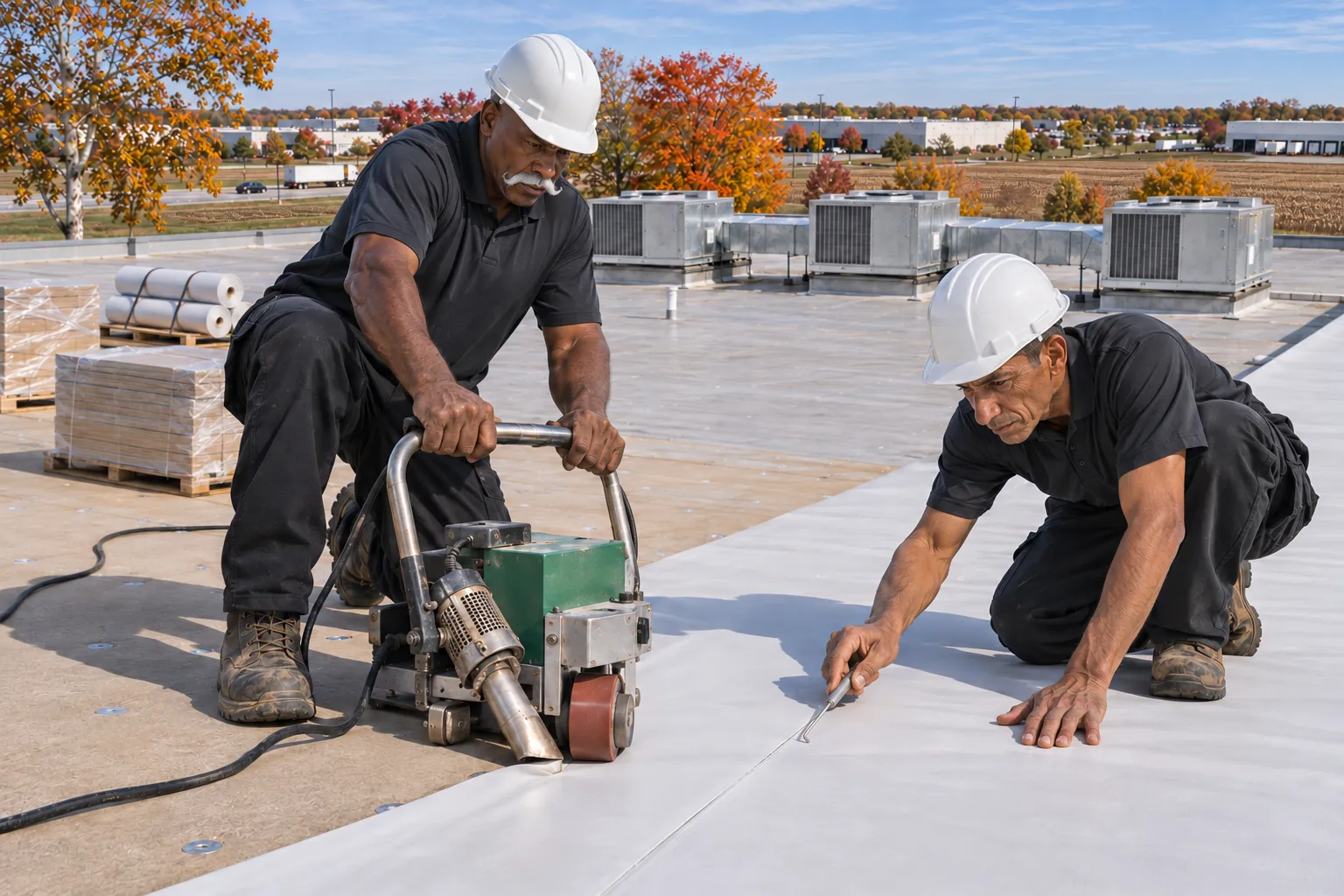
Reflective welded membrane for stores and warehouses with heavy cooling.
TPO Roofing details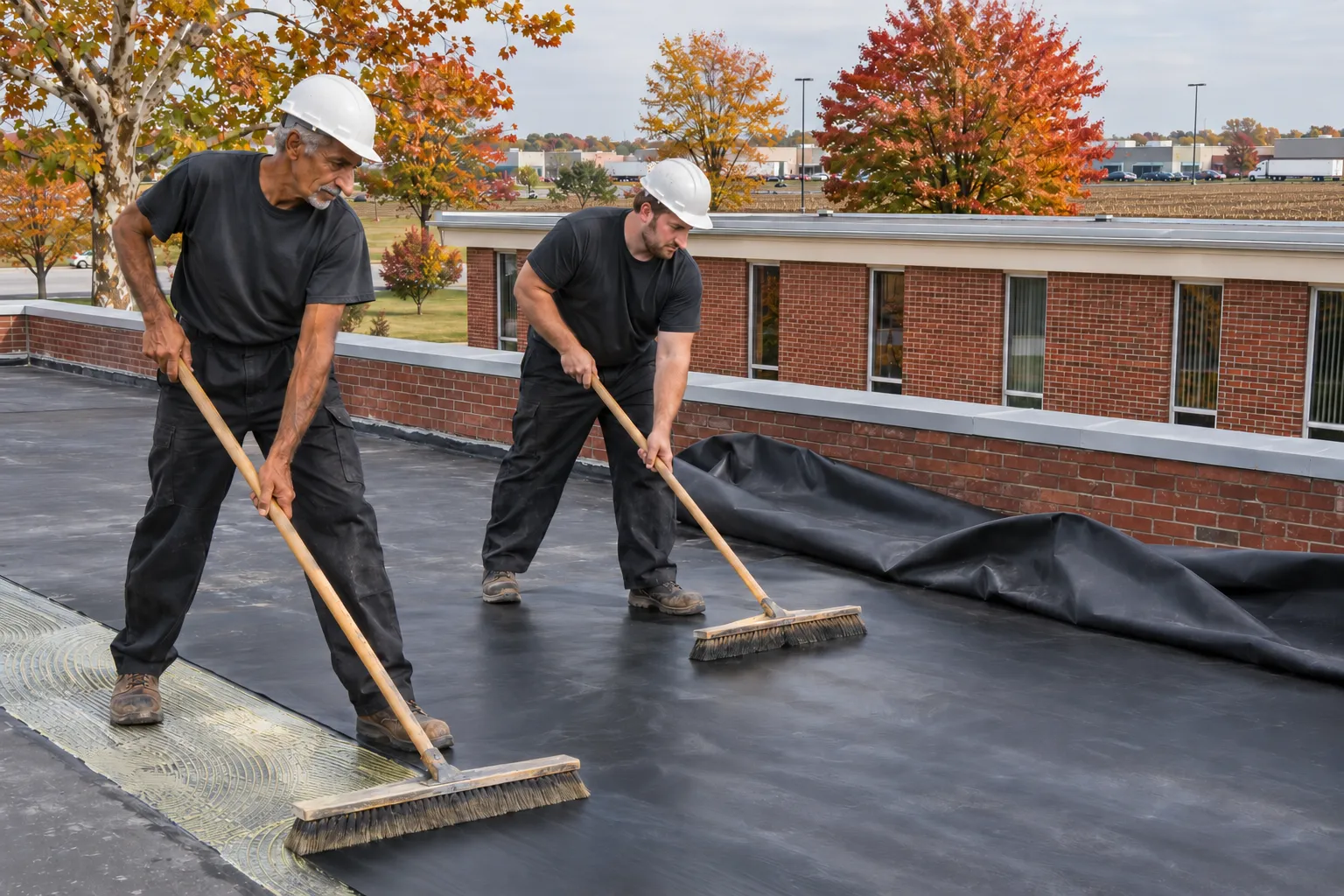
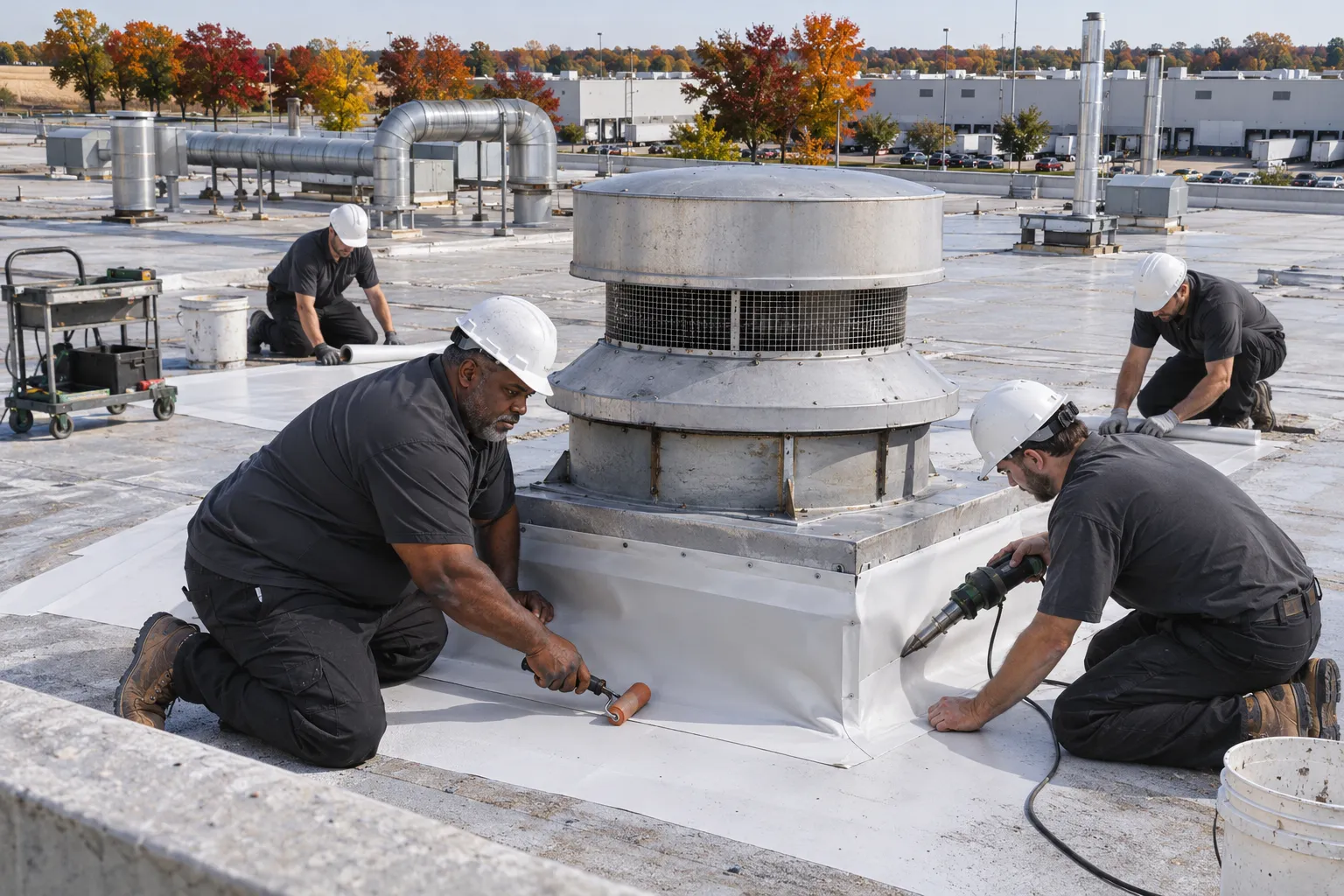
Plant roofing with exhaust-rated sheet and phased sections.
Industrial Roofing details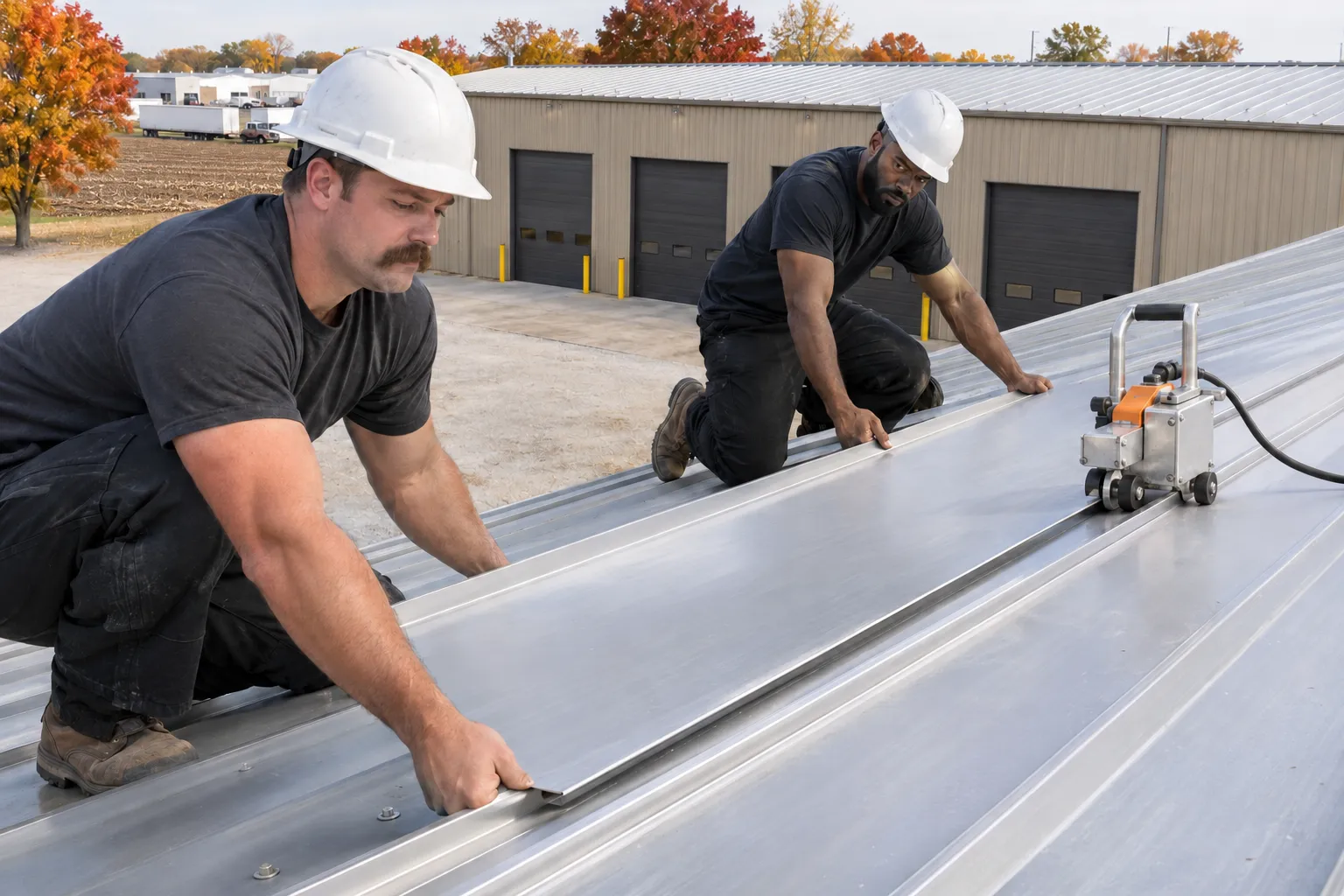
Metal panels where the building has slope or needs a retrofit.
Commercial Metal Roofing detailsWe cut cores, count layers, and read moisture across the roof. You see the results before any recover or tear-off price.
Five decisions, in order, with testing at the front.
Moisture readings run across a grid on the roof, and cores at several points show layers, insulation type, and deck condition. Results go into a short report with photos of each core.
One dry layer over a firm deck gets a recover board. A second layer or wet insulation means removal down to the deck. The estimate shows which test decided the path.
Cooling load and rooftop traffic decide. Stores and equipment-heavy roofs lean TPO; offices and storage lean EPDM. Rooftop units and skylights also figure into the choice.
Only what can be finished in a day is opened. Each night the section ends sealed to the old roof with a temporary tie-in. Temporary tie-ins get checked each morning before work resumes.
We walk the roof with you, review drains and flashing, and leave the core results and system details for your files. Keep the records for insurers and future roof work.
These towns are in our area as well. If your building sits somewhere else, call us or send us a message with the address.
Plants and shops where stack exhaust sets the membrane choice.
Shop and ag buildings with metal panels and condensation questions.
Retail and office roofs phased around open storefronts.
Distribution roofs staged from the truck court side.
Common questions from owners in Shelbyville.
Cost
Roof size, system, insulation, and whether old layers come off set most of it. Core results often move the price more than square footage, which is why we test first. Insulation thickness and edge metal also move the number.
Often, since there is no tear-off labor or disposal. It only works over one dry layer and a firm deck. Cores tell us quickly whether a recover is on the table.
Finding Us
We cover Shelbyville for roof walks, installs, and follow-up visits. Call or send the address and we set a time to inspect. Send the address and the problem you see, and we schedule a visit.
Warehouses, offices, stores, and light industrial buildings with flat, low-slope, or metal roofs. Older retail and office roofs make up much of that work.
Testing
Cores show layers, insulation, and moisture, which decide recover versus tear-off. Pricing without them is guessing at the largest cost on the job. The core photos go into your estimate for your records.
Yes, before we leave the roof. Each core is filled with matching insulation and sealed with membrane so no water gets in. Each patch is checked again on the final walk.
Book a roof walk for your Shelbyville building. We test the layers, map moisture, and price recover or replacement with the results attached.