Shrinkage
Rubber Pulling Off the Walls
Old EPDM shrinks over the years and bridges the corner where roof meets parapet. The tight sheet tears at that bend and water runs down the wall.
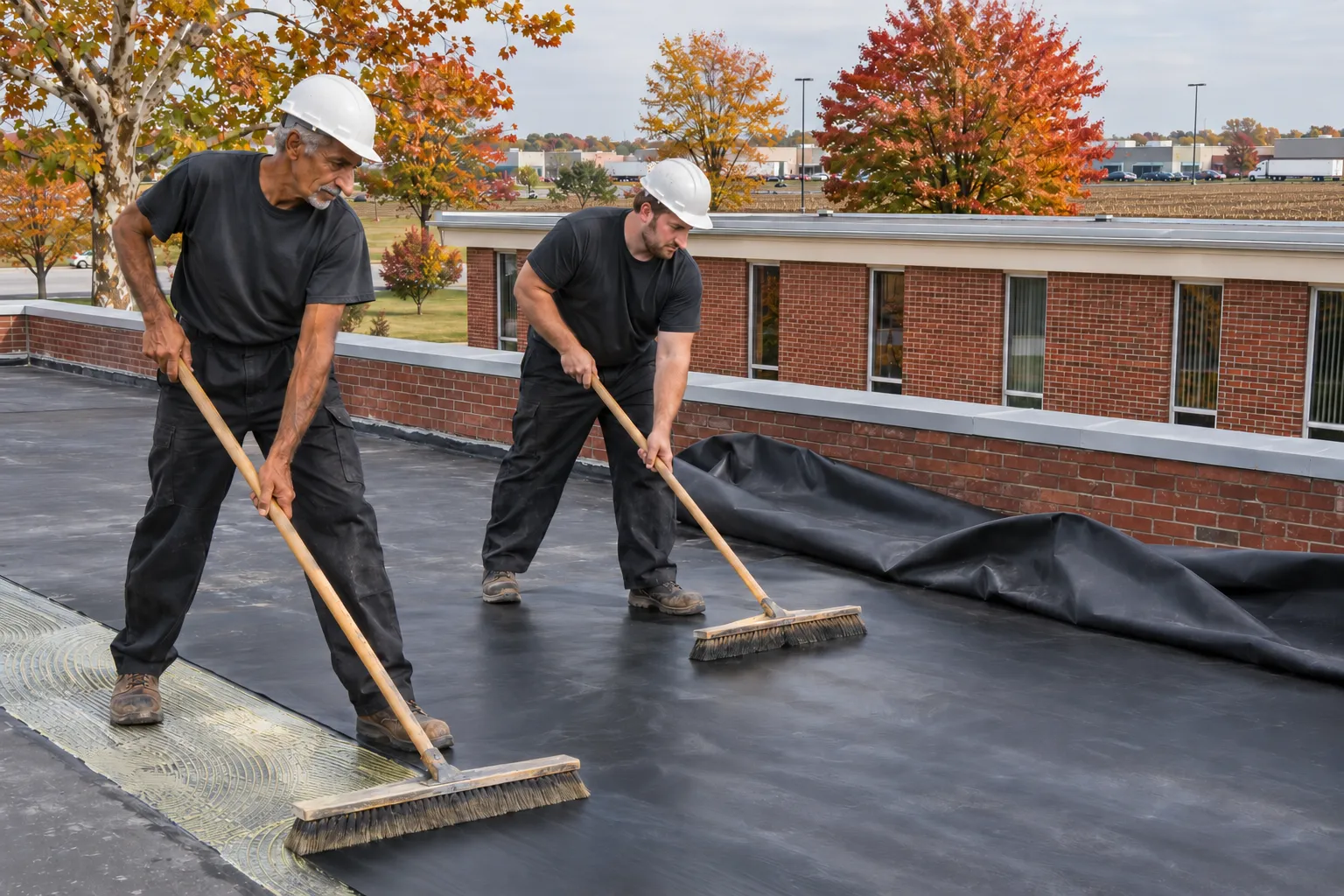
As a Greenwood EPDM roofing contractor, we lay black rubber membrane in wide sheets on offices, schools, and churches, with taped laps and fresh flashing at every wall.
Greenwood EPDM roofing fits low-slope roofs that see light traffic and long winters. Compare your roof with both columns.
An aging rubber roof gives clear warnings. These four show up on most of the EPDM roofs we walk.
Old EPDM shrinks over the years and bridges the corner where roof meets parapet. The tight sheet tears at that bend and water runs down the wall.
Roofs from the glued-seam era open at the laps once the adhesive turns brittle. You can lift the edge with a finger along whole runs.
Crushed insulation lets the rubber sink into shallow bowls. Those pools hold dirt, freeze in January, and stress the laps that cross them.
Wind and foot traffic push stone into piles, leaving the membrane exposed to sun in some places and overloaded in others.
EPDM goes down three ways. The deck, wind exposure, and structure decide which one your building gets.
Bonding adhesive glues the rubber to cover board across the whole field, leaving a smooth roof that holds well at edges.
Plates along the laps hold the sheet to a steel deck. It suits large plain roofs and installs in cooler weather.
Loose-laid membrane held down by stone on structures that carry the weight. Repairs mean moving stone back and forth.
Open laps on a younger roof get cleaned, primed, and covered with cover strip when the rest of the rubber is in good shape.
Rubber roofs have stayed common on Indiana schools and offices for practical reasons.
EPDM stays pliable on cold mornings, so the field sheet moves with the deck instead of cracking when temperatures swing through the winter.
Wide rolls cover big sections with few seams. Fewer laps leave fewer places where water can find a way under the membrane.
Cuts and punctures take a cleaned, primed patch of the same rubber, so small damage stays a small repair.
Adhered membrane over cover board makes little noise when wind and rain hit the roof, which helps above classrooms, offices, and sanctuaries.
Shrinking EPDM tears at walls and corners first. We check the laps, the wall flashing, and the insulation, then price a repair or a full replacement.
An EPDM job follows five decisions from first walk to finished laps.
We pull on laps, look for shrinkage at walls, and cut cores where readings show water. The findings decide whether repair or replacement makes sense.
A handful of open laps gets cover strip. Seams failing everywhere, brittle rubber, or wet insulation point to removing the old sheet entirely.
The deck, wind exposure, and structure set the attachment. Stone ballast only goes on structures that carry the load.
Sheets relax before bonding, then laps get primer and seam tape rolled down firmly. Corners and walls get new rubber flashing.
New termination bar, coping, and edge metal finish the roof. We review drains and wall details with your facilities contact.
Four details tell us whether an EPDM roof needs seam work or a new sheet.
We run a fingertip along each lap looking for lifted edges and dried adhesive. Long runs of open seam push the estimate toward replacement; a few short gaps stay a cover-strip repair.
Shrinking rubber shows first where the roof turns up a parapet. Bridged corners and tears at the base of the wall tell us how far the sheet has pulled.
Soft spots and moisture readings guide core cuts. Dry boards can stay under a new sheet, while soaked boards come out before any rubber goes back down.
On stone-ballasted roofs we look for bare rubber and piled stone. Uneven ballast leaves some areas exposed to sun and others loaded heavier than the design.
Compare EPDM with the other systems we install before you decide.
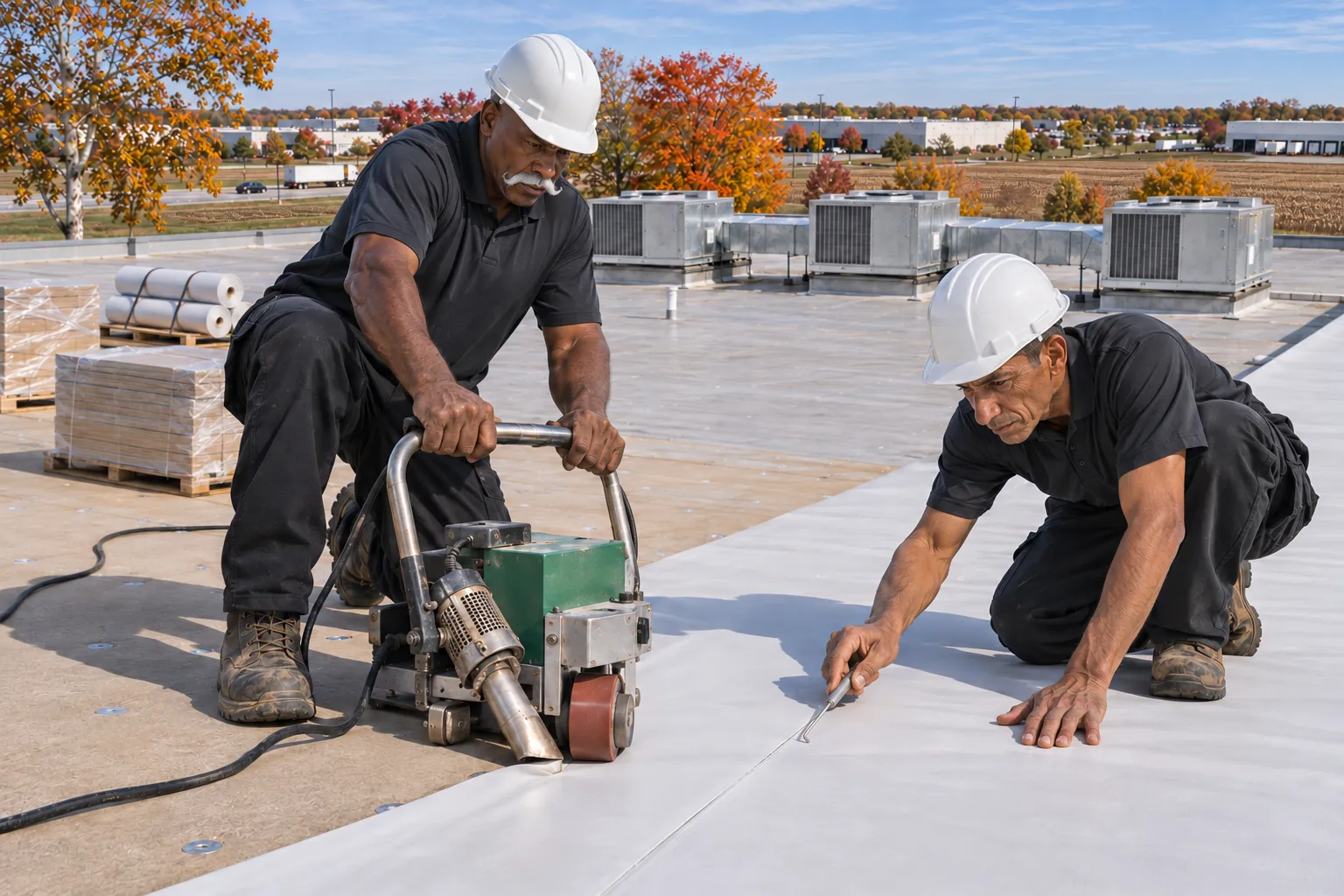
White welded membrane for roofs with heavy cooling loads and many rooftop units.
TPO Roofing in Greenwood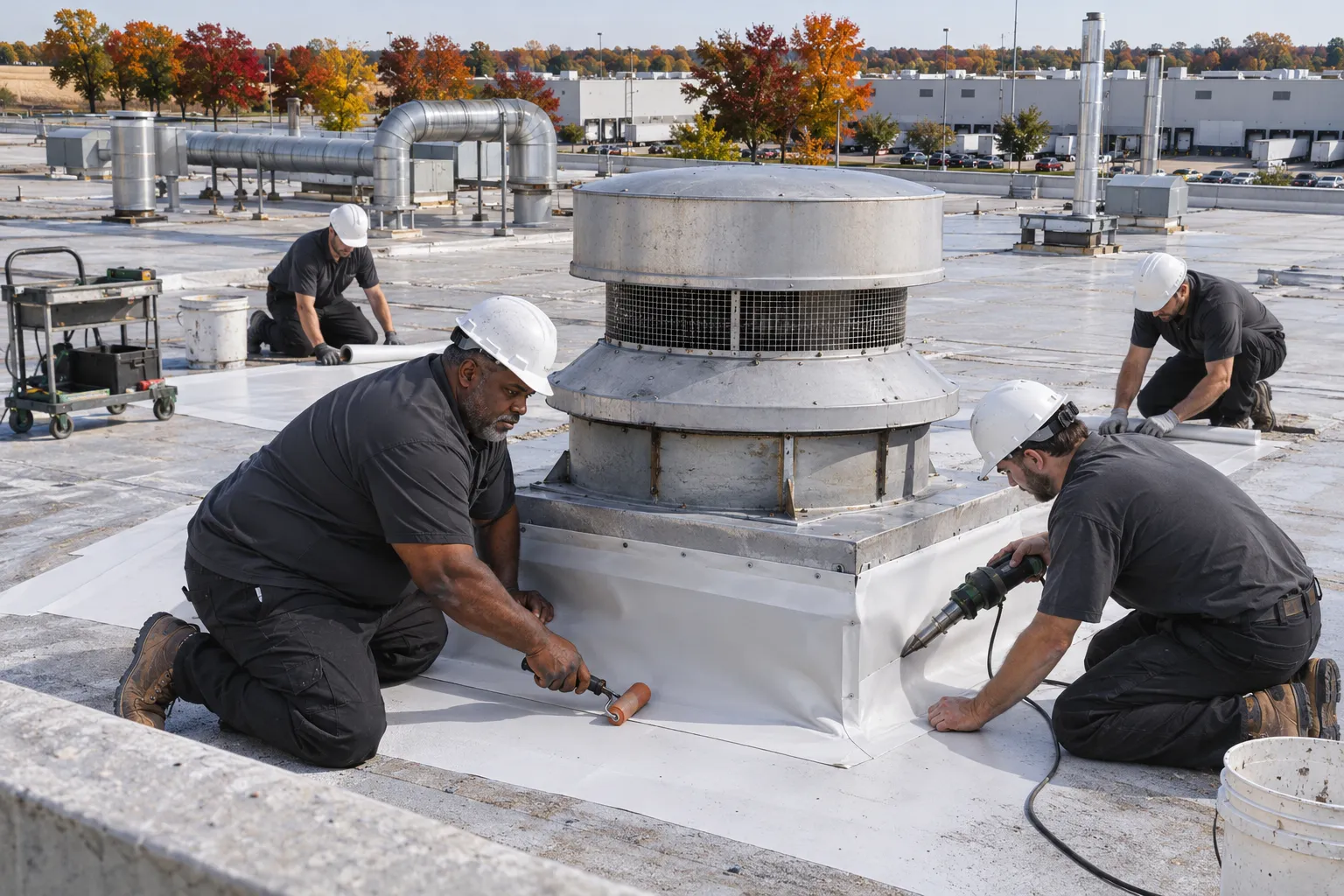
Systems picked for exhaust, heavy curbs, and phased work over running plants.
Industrial Roofing in Greenwood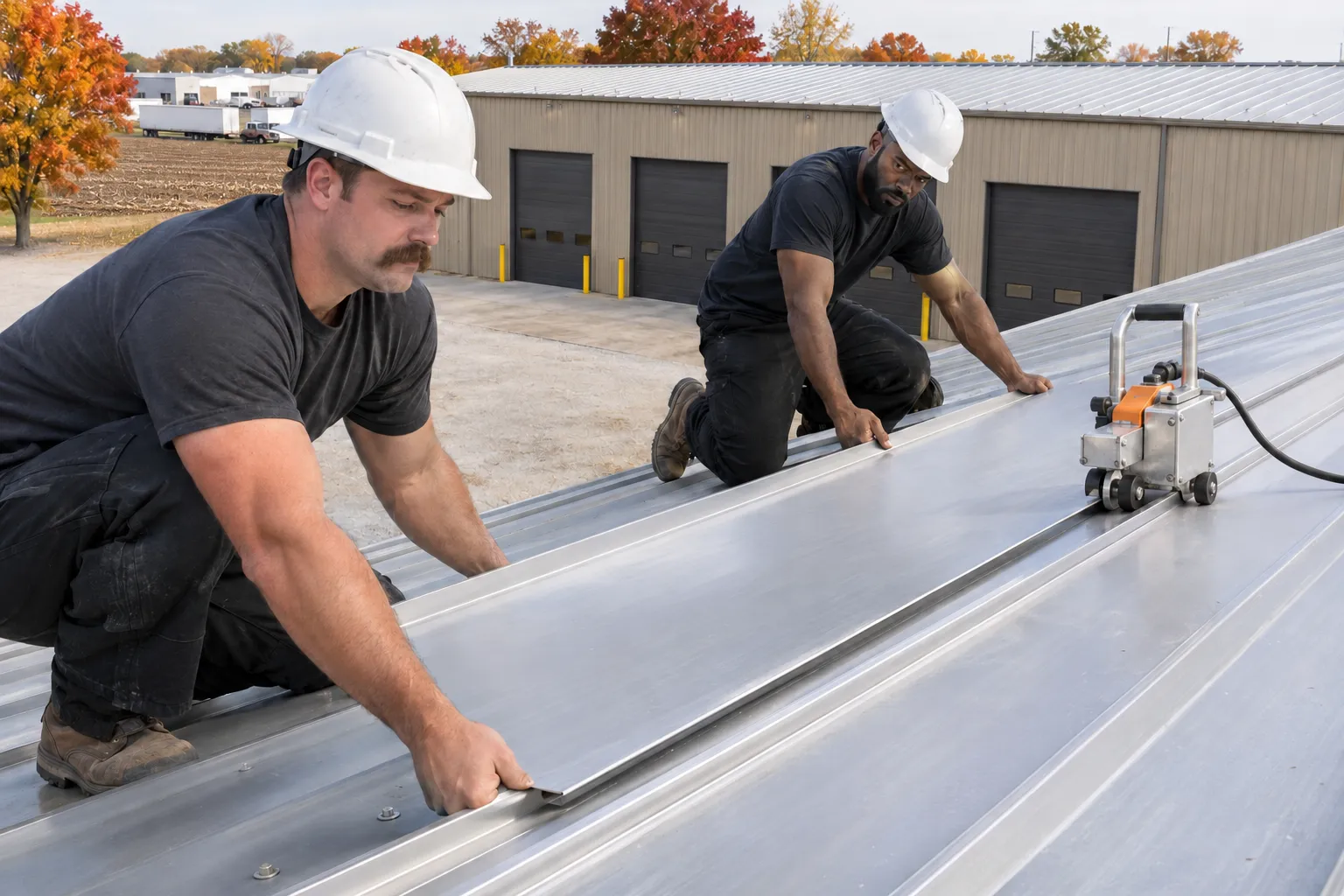
Standing-seam metal for shops and ag buildings, or new panels over a tired flat roof.
Commercial Metal Roofing in GreenwoodPlain answers about rubber roofs, their cost, and their care.
The Basics
A synthetic rubber membrane, almost always black, laid in large sheets over insulation on low-slope roofs. Laps are joined with seam tape, and the sheet is glued, fastened, or held down with stone.
Black EPDM handles cold and light traffic well. White TPO reflects heat and handles crowded equipment roofs. Cooling load and foot traffic usually settle the choice.
Cost
Roof size, sheet thickness, attachment, insulation, and removal of old layers lead the list. Wall flashing, penetrations, and edge metal add labor on busy roofs.
Loose-laid rubber skips most adhesive and fasteners, so material costs drop, but the structure has to carry the stone and future repairs take longer.
Care
When shrinkage tears it at walls, laps open across the roof, or insulation underneath is wet. A few open seams on an otherwise flexible sheet get repaired instead.
Twice a year, in spring and fall, plus after hail. Clear the drains, press along the laps, and look at wall corners where shrinkage shows first.
Tell us about the rubber roof on your school, church, or office. We test the laps and insulation and price the repair or the new sheet.