Commercial Roofing Services in Greenwood by Roof System
Each of our commercial roofing services in Greenwood centers on one roof system. Pick the card that matches your building, then read its page for details.
TPO Roofing
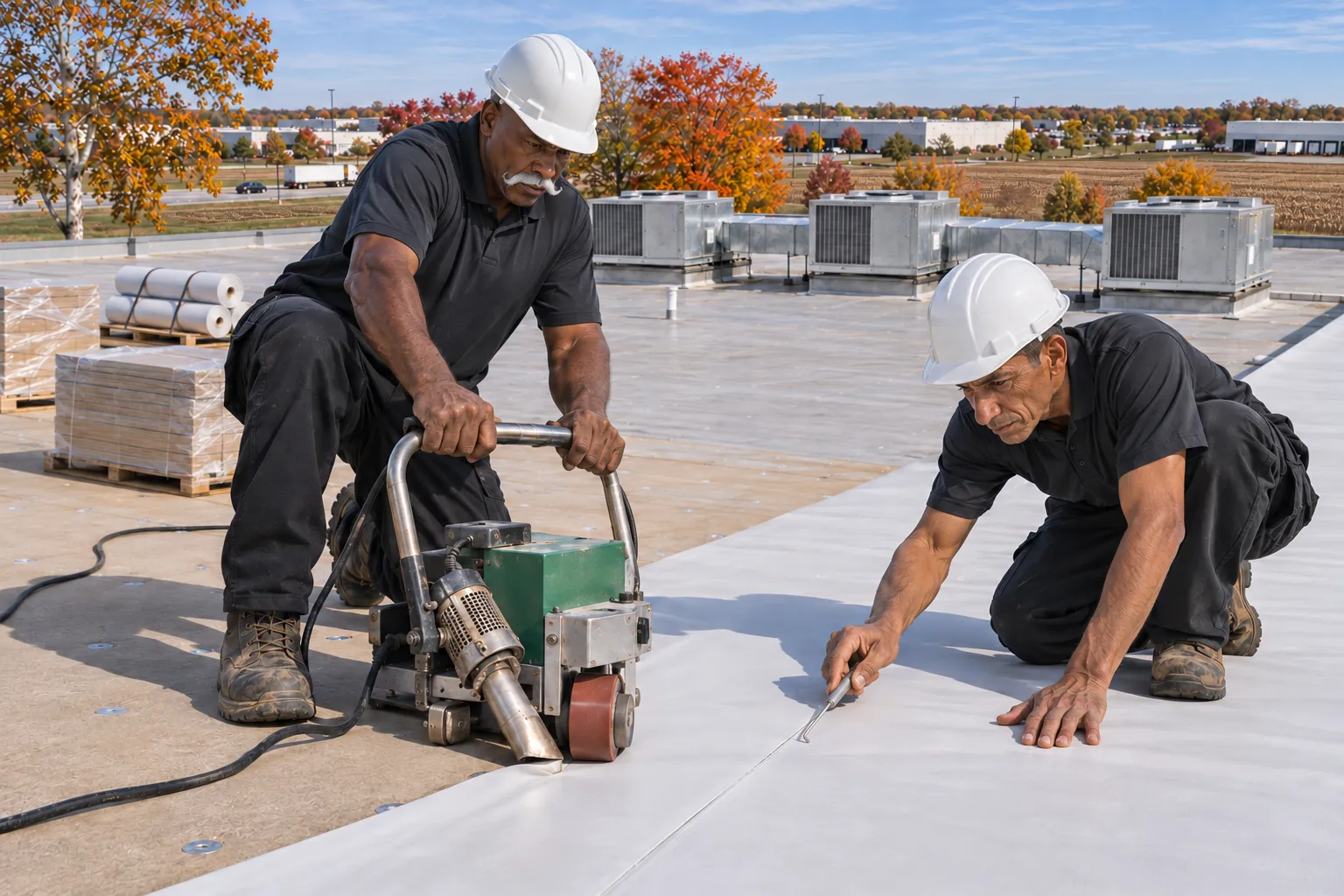
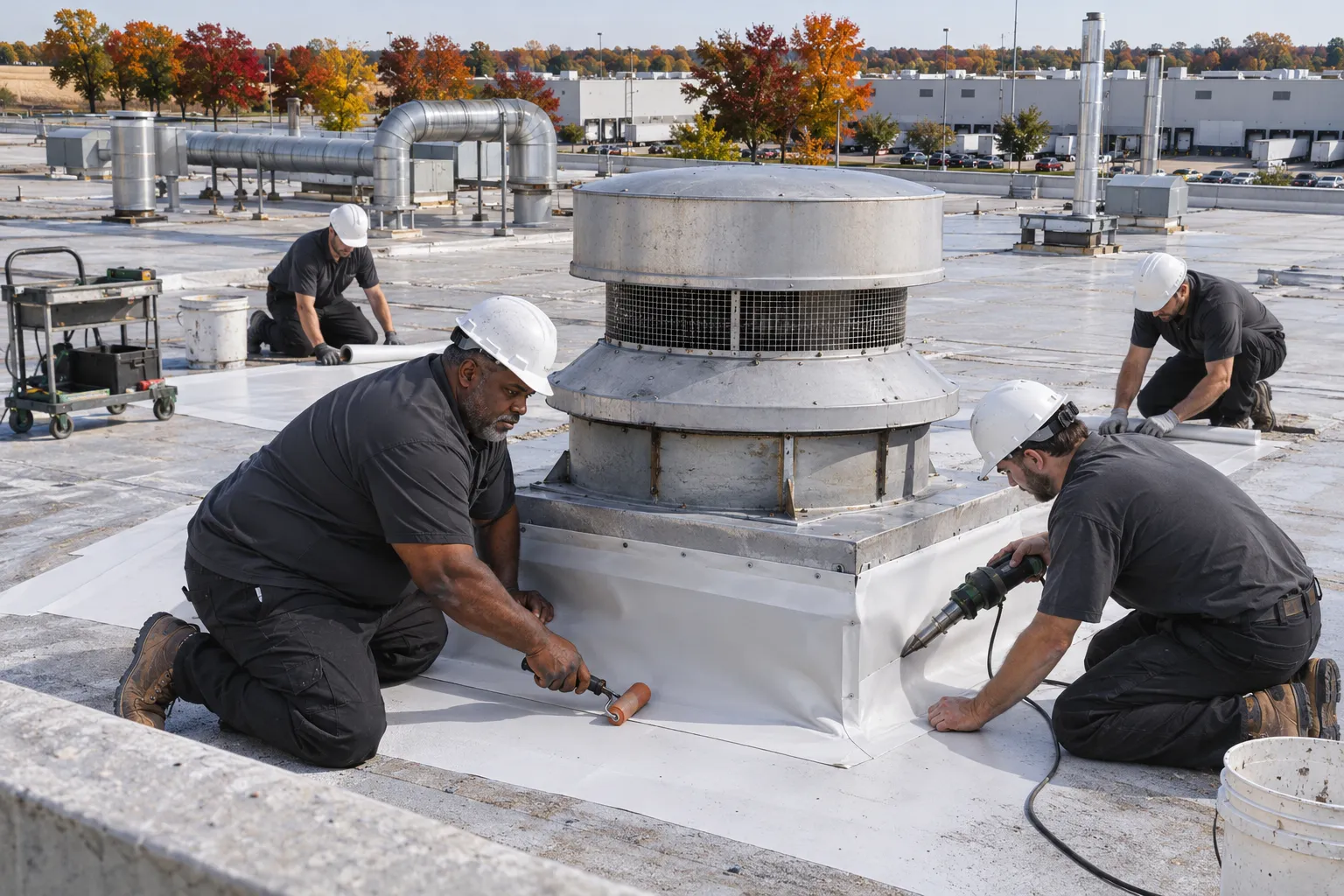
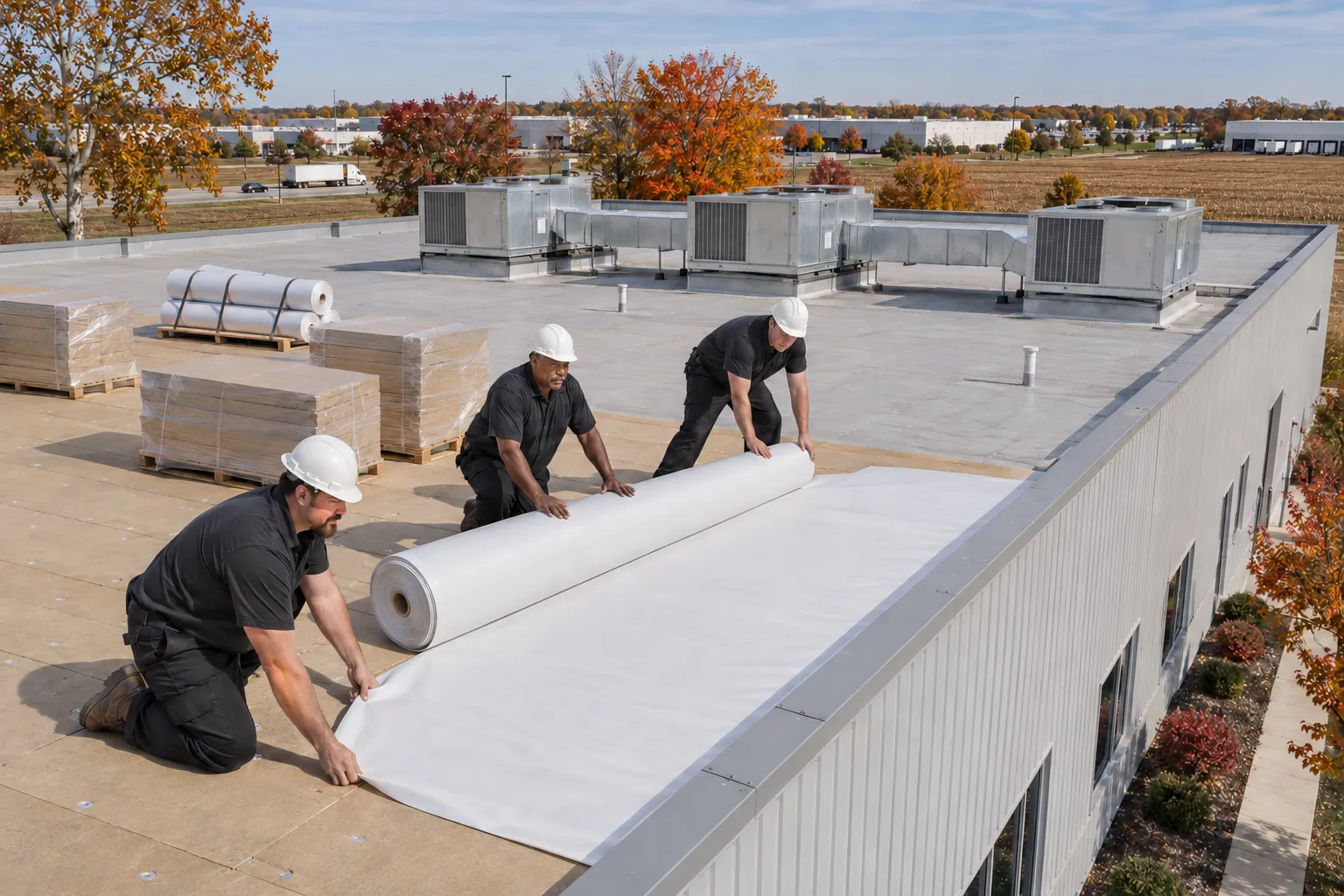
Heat-welded white membrane for flat warehouses, stores, and offices. It suits roofs crowded with HVAC units and buildings that fight summer heat under a dark roof. Welded laps get probed before each section is called done.
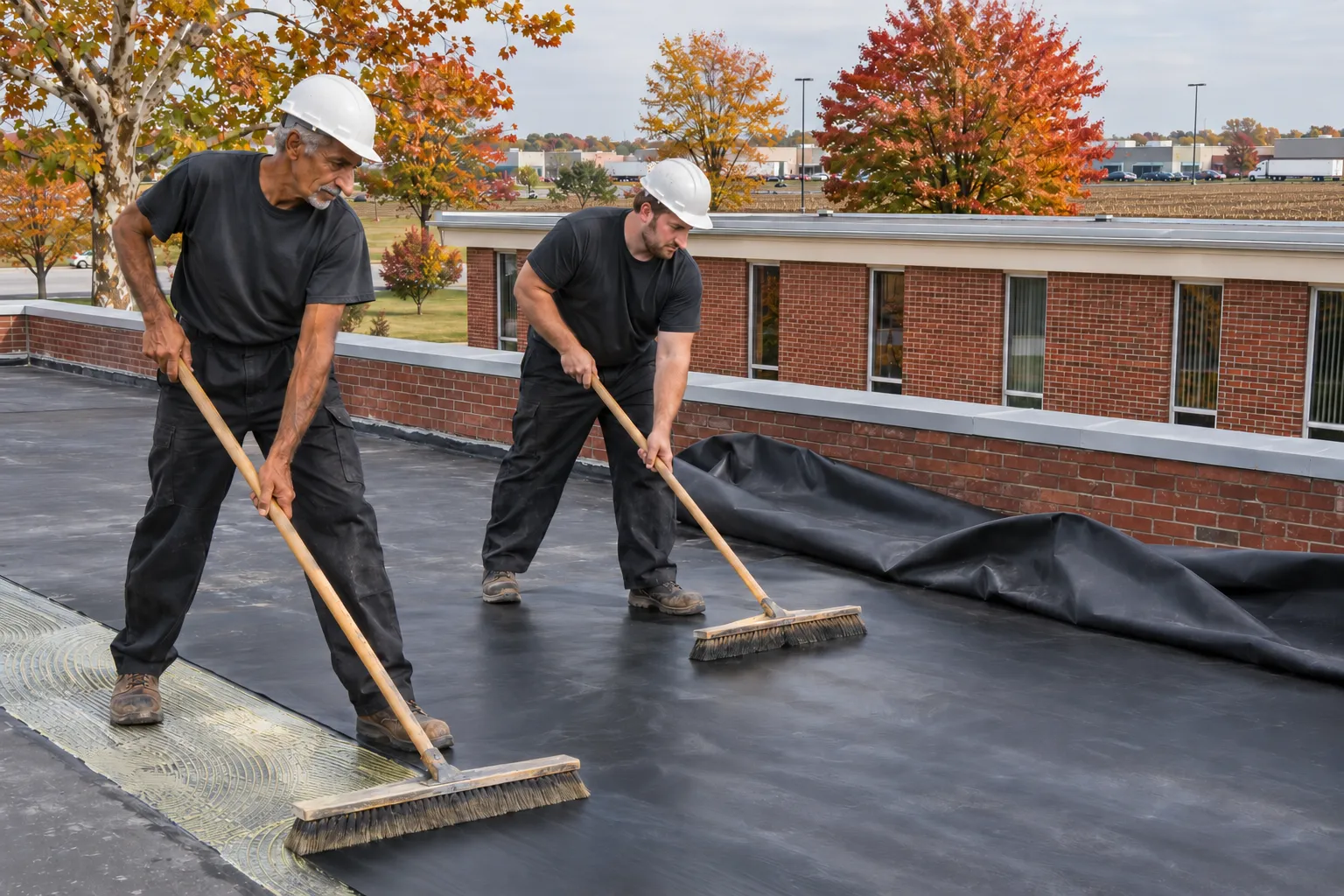
Rubber membrane in wide sheets for schools, churches, and offices. It bends through cold snaps and takes simple patches when a lap or puncture needs work later. Ballasted, fastened, and adhered versions fit different decks.
Roofs for plants and mills, laid out around exhaust stacks and heavy curbs. Work runs in phases with debris control over production below. Residue-rated membrane goes around stacks that vent oil or chemicals.
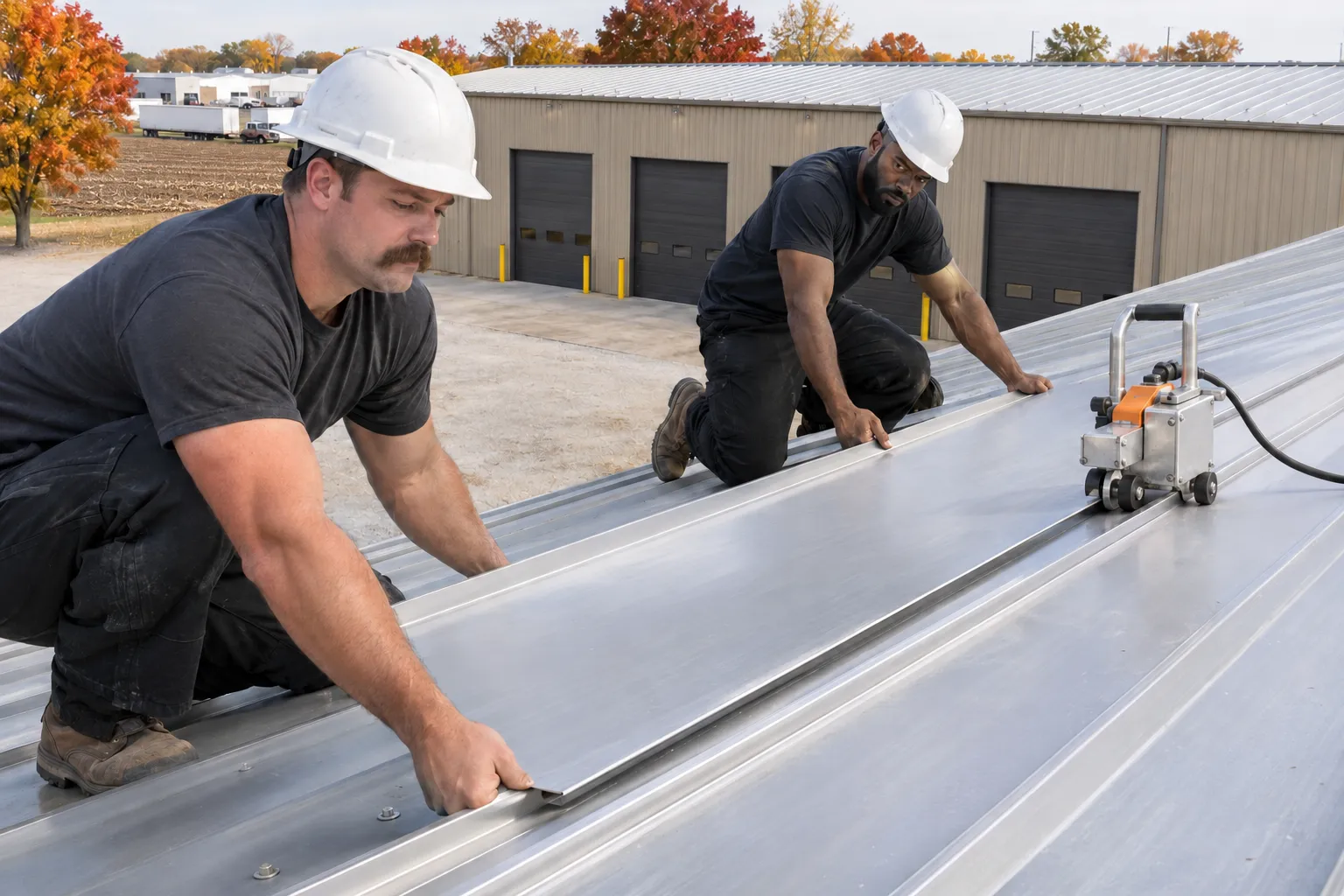
Standing-seam and ribbed panels for shops, barns, and sloped buildings, plus framing that sets new metal over a ponding flat roof. Snow guards and trim are detailed before panels are ordered.
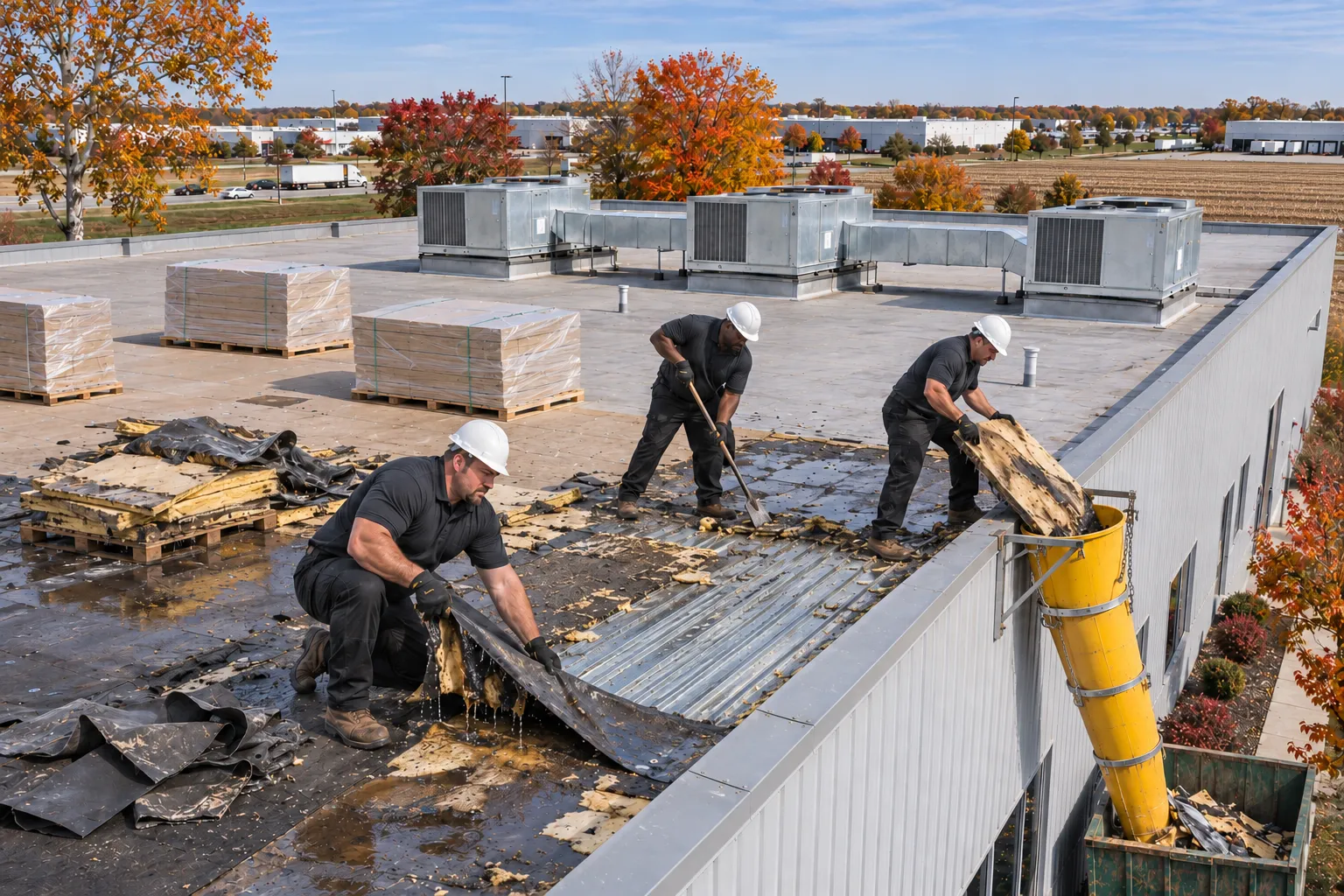
Commercial roof replacement covers buildings where repairs no longer hold: wet insulation across large areas, seams failing everywhere, or a deck that rusted under old leaks. Patching those roofs costs more each year while the damage underneath keeps spreading.
Old layers come off down to the deck, damaged deck gets replaced, and a new TPO, EPDM, or metal system goes on with fresh insulation, flashing, and edge metal. Work runs in sections, so the building stays closed and in use each night.
Wet boards removed, never covered over
Deck repaired before the new system
New flashing and edge metal at every wall
System Match
Which System Fits Which Roof
Start from what your roof looks like today. Each card points to the system that answers it, and the roof walk confirms the match.
Dark Roof, High Cooling Bills
Reflective TPO turns back the summer sun that a black membrane soaks up. Cooled stores and warehouses gain the most.
Cold Roof, Light Traffic
EPDM rubber flexes through winter and suits roofs few people walk on. Offices, churches, and schools are common fits.
Stacks Venting Residue
Industrial roofing puts a rated membrane around each stack and fan. Open field areas take standard membrane.
Flat Roof That Keeps Ponding
Retrofit metal framing adds slope, and panels shed water to gutters. The old roof stays in place below the framing.
Replacement
Is Your Roof Past Patching?
We cut cores and read moisture to tell you whether repair still makes sense or replacement is the better spend. You get the photos and readings either way.
Every service follows these five decisions so you can plan budget and building use.
1
Inspect Your Roof
Cores, moisture readings, and photos of every curb, drain, and edge give a clear picture of the roof before any price is set. Core photos go to you with the estimate.
2
When to Replace a Commercial Roof
Replacement wins once wet insulation, open seams, or deck damage spread past a few spots. Isolated problems stay repairs. The estimate explains which path was chosen and why.
3
Choose the System
Slope, traffic, exhaust, and cooling load point to TPO, EPDM, industrial-grade membrane, or metal panels. Exhaust from inside the building counts as much as slope.
4
Plan Around Your Operations
Docks, entrances, shifts, and tenant hours set where lifts stand and which roof sections open on which days. Lift and dumpster spots are marked on a site sketch.
5
Close Out Together
A final walk covers drains, flashing, and walkway pads, and you keep notes on the installed system. A short care checklist for the new roof is handed over too.
No matter which system goes on, four things are part of every job, from a small office roof to a full plant.
A Roof Walk With Photos
Before pricing, we walk the roof, photograph each curb, drain, and edge, and send the pictures with the estimate so you see what we saw.
Moisture Testing Where It Counts
Readings and core cuts show whether insulation under the membrane is wet, which separates a recover from a tear-off.
Flashing Detailed in Writing
Walls, curbs, pipes, and edges are listed in the scope with the flashing method for each, so nothing is left to guesswork later.
Work Planned Around Occupants
Entrances, docks, shifts, and tenant hours set the order of sections, and each day ends with the roof closed.
Estimate Contents
What Every Written Estimate Lists
Line up bids against these eight items to compare them fairly. A bid missing any of them leaves a cost question open.
Roof system and membrane thickness or panel gauge
Insulation type, thickness, and tapered areas
Tear-off or recover, with core results
Flashing method at curbs, walls, and pipes
Edge metal, coping, and gutters
Drain work and any new drains or scuppers
Walkway pads to rooftop equipment
Staging plan and section order
Service Questions
Questions About Our Roofing Services
What owners ask when comparing systems.
Replacement
What Does Commercial Roof Replacement in Greenwood Include?
Removal of old layers, deck repair where needed, new insulation, the new membrane or panels, flashing at walls and curbs, and new edge metal. The deck gets repaired before new layers go down.
Can Part of a Roof Be Replaced?
Yes, when the rest tests dry. The new section ties into the old roof at a clean seam. Tie-ins are checked on the final walk.
Choosing
Which System Lasts Longest?
Standing-seam metal usually outlasts membranes, but upkeep matters more than the label. Drains kept clear and laps checked yearly add years to any system. Clear drains and yearly checks matter for every system.
Can Two Systems Share a Building?
Often. A metal shop with a flat office wing gets panels on the shop and TPO or EPDM on the office. Each section is priced on its own line.
Timing
How Long Does a Replacement Take?
Roof size, tear-off, and weather set it. Small roofs finish in days; large warehouses run in phased sections over weeks. Phasing lets owners pick the order of sections.
What Season Works Best?
Late spring through fall suits adhesives. Fastened systems and metal go on through much of the winter. Cold-weather plans use fastened systems.
Free Estimate
Book Commercial Roofing Services in Greenwood
Tell us about the building and the roof problems you see. We walk it, test it, and price the system or replacement it needs.