Heat
A Black Roof Over a Hot Warehouse
Dark built-up and EPDM roofs soak up July sun. A white TPO surface sends more of it back, so the deck and the space under it stay cooler.
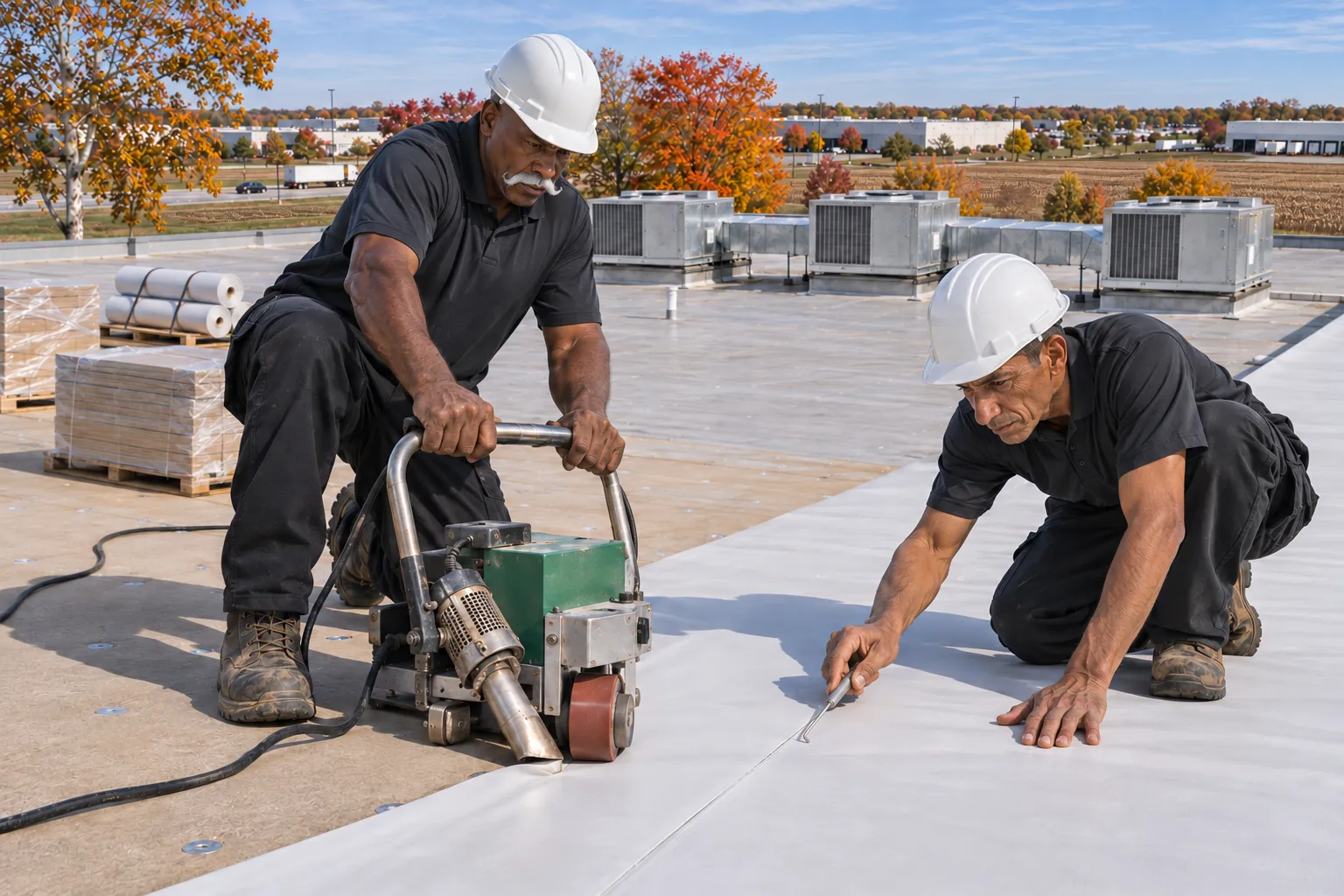
As a Greenwood TPO roofing contractor, we install white, heat-welded TPO membrane on warehouses, stores, and offices and flash every curb and drain to the maker's details.
Greenwood TPO roofing works on flat and low-slope roofs with a dry, firm base. Check your building against both lists before you plan a budget.
These are the problems a new TPO membrane solves on the buildings we see most.
Dark built-up and EPDM roofs soak up July sun. A white TPO surface sends more of it back, so the deck and the space under it stay cooler.
Adhesive seams on older roofs dry out and peel. TPO laps are fused with hot air, so the seam becomes one sheet instead of two sheets glued together.
Curbs patched again and again leave lumps of mastic that trap water. New TPO goes up each curb with premade corners and a welded base flashing.
HVAC technicians wear the same line across the roof. We weld walkway pads along those paths so boots and dropped tools land on a sacrificial layer.
The membrane is one choice. Attachment, insulation, and whether old layers stay decide the rest of the scope.
Plates and screws hold the sheet to the deck along each lap. Quick to install and workable in cold weather on steel decks.
Bonding adhesive holds the whole sheet down, which keeps it quiet in wind and smooth over cover board on concrete or wood decks.
A recover board goes over one dry existing layer, then new TPO. Old material stays in place and the building stays closed.
Sloped boards pitch water to drains on flat decks where ponding rings form, and they add insulating value at the same time.
Owners choose TPO for reasons they can see on the roof and in the building below.
Welded laps leave no adhesive line to dry out. We probe every seam after welding, so a weak spot gets fixed while the crew is still on the roof.
Reflective membrane keeps the roof surface from baking in summer. Stockrooms and loading areas under it gain the most on the hottest days.
Premade inside and outside corners, pipe boots, and curb wraps weld to the field sheet, so flashing at units stays tight through freeze and thaw.
A cut or puncture years from now gets cleaned and a TPO patch welded over it. Matching material keeps future repairs small.
A white TPO membrane over new insulation changes how much heat reaches the space under the deck. We measure your roof and price the switch.
Five decisions carry a TPO job from the first roof walk to the final seam check.
Core cuts and moisture readings tell us whether the insulation under the old roof is dry. Photos of each curb, drain, and edge go into the estimate.
One dry layer can stay under a recover board. Wet boards, a second layer, or a damaged deck mean the old roof comes off down to the steel or concrete.
Deck type and wind exposure set mechanical attachment or full adhesion, and the membrane thickness is named in writing before any order is placed.
Test welds start each day to set the welder for that morning's temperature. After welding, crews probe every lap and repair any gap on the spot.
Curbs, walls, and edges get welded flashing and new metal. We walk the finished roof with you and note the walkway pads and drain locations.
Some buildings need a different membrane or metal panels instead of TPO.
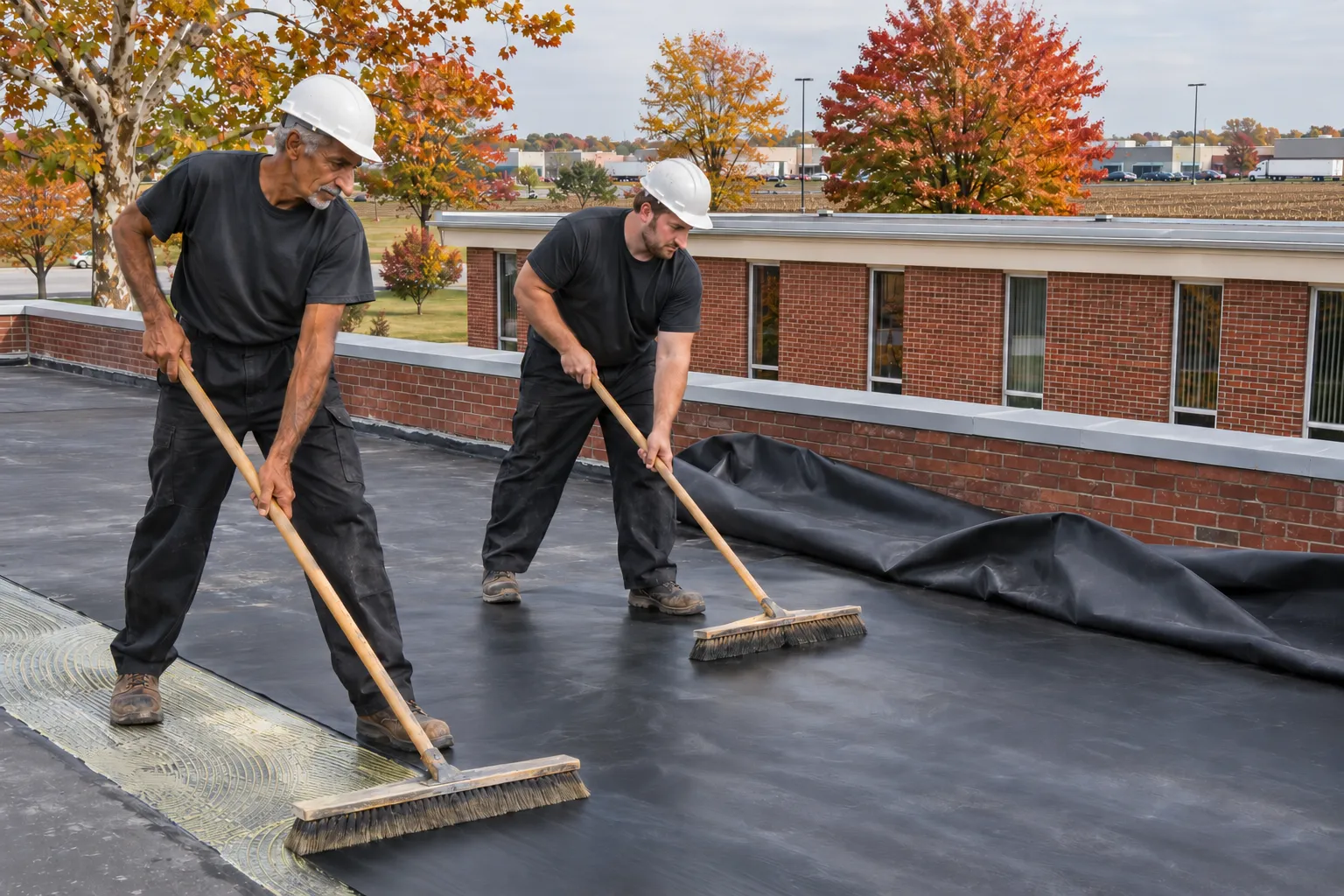
Black rubber membrane for roofs with little foot traffic and long cold seasons.
EPDM Roofing in Greenwood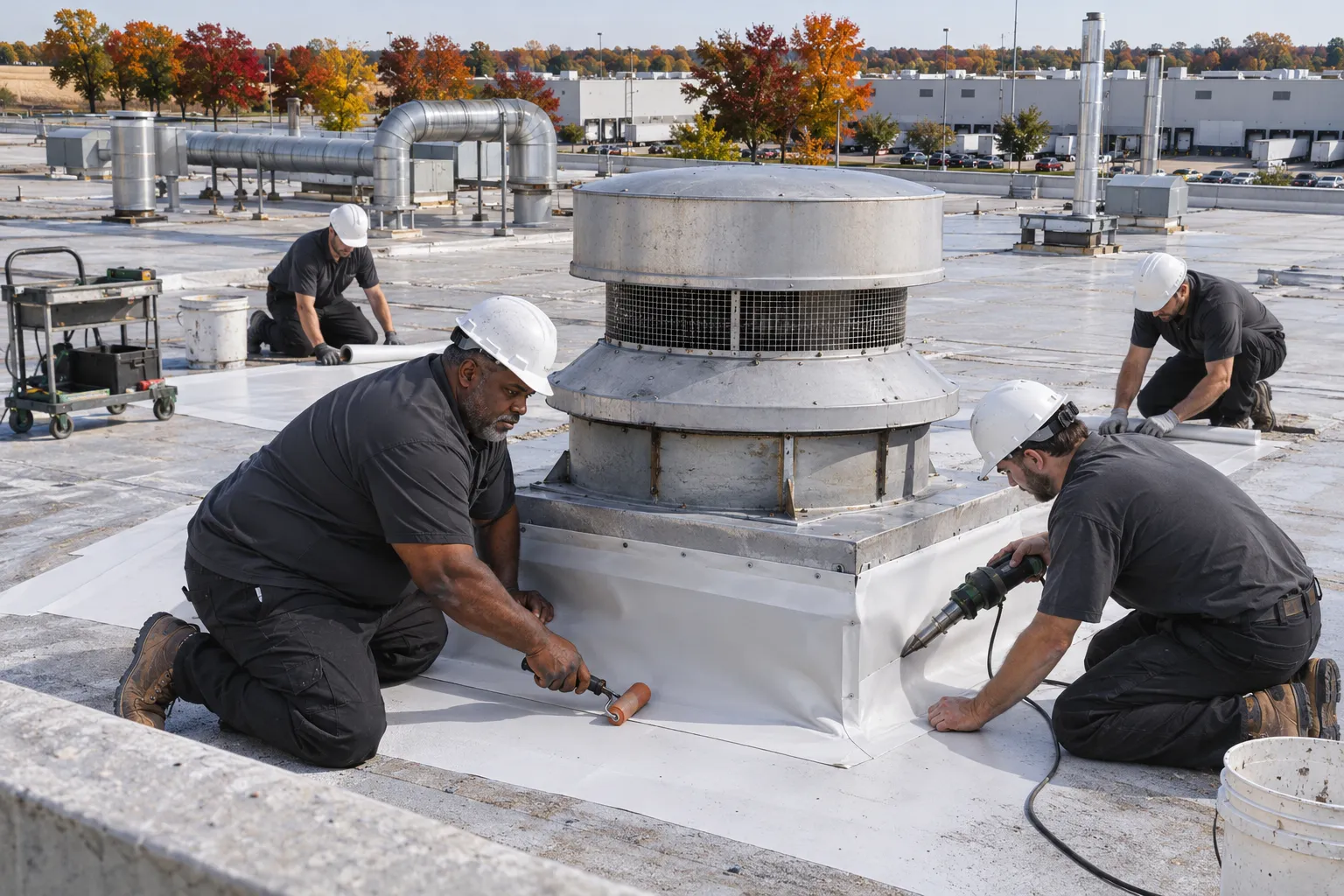
Plant roofs with heavy curbs and process exhaust, built in phases over working floors.
Industrial Roofing in Greenwood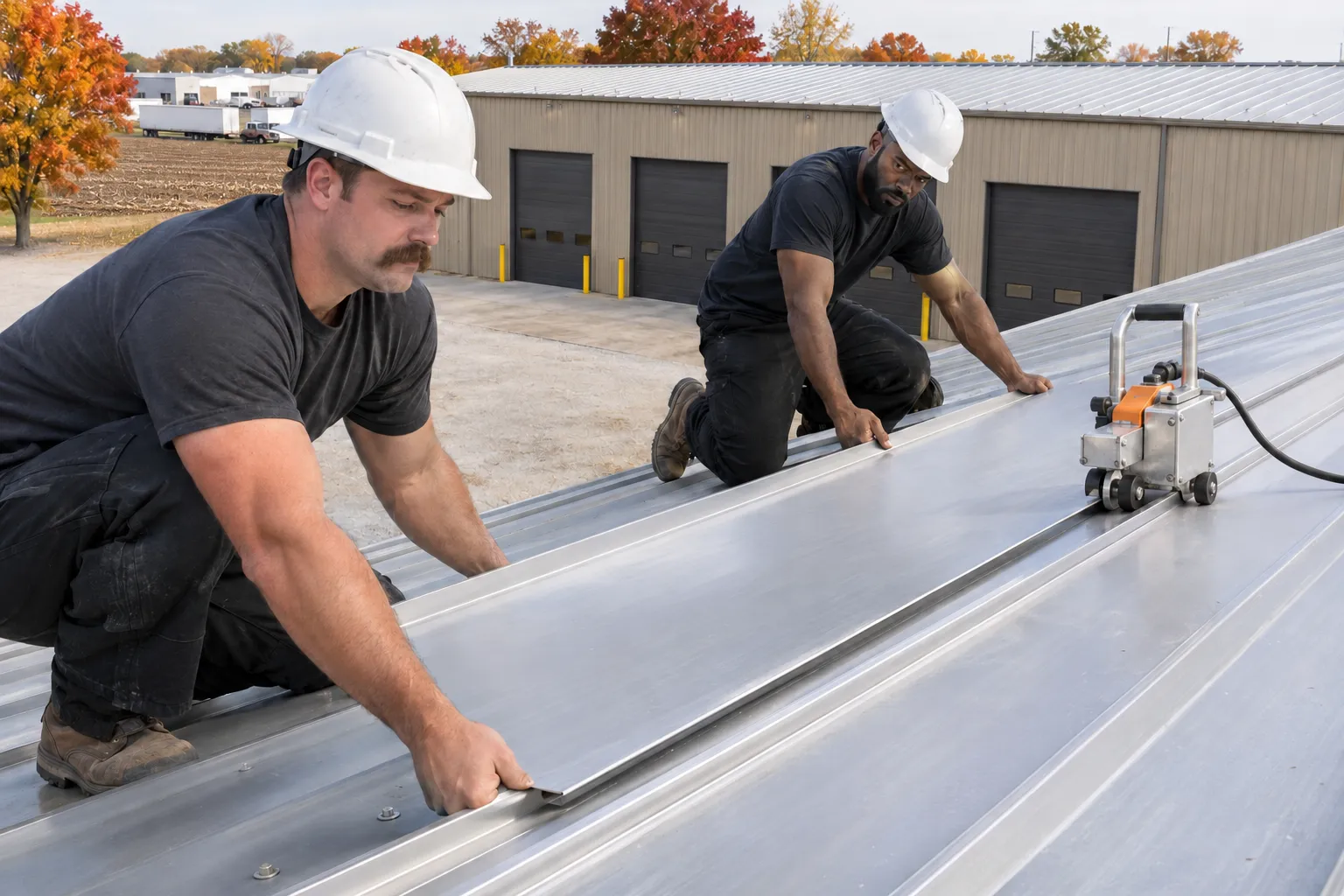
Standing-seam panels for metal buildings and retrofit metal over worn flat roofs.
Commercial Metal Roofing in GreenwoodAnswers to the TPO questions owners ask before they sign.
The Basics
A white single-ply membrane, thermoplastic polyolefin, rolled out over insulation on flat and low-slope roofs. Its laps are melted together with hot air, and it is fastened down or held with adhesive to suit the deck.
Fewer layers, lighter weight, and a reflective surface. Built-up roofs bury seams under gravel and bitumen; TPO leaves every lap visible, welded, and easy to check later.
Cost
Roof area, membrane thickness, insulation, and tear-off set most of the price. Each curb, pipe, and drain adds flashing labor, and crane access to the roof adds equipment time.
Usually, because no old material goes to the dumpster and the deck stays covered. It works only when core cuts show one dry layer, which is why we test before pricing.
Install
Yes, with the welder settings checked by test welds each morning. Adhesives have temperature limits, so fully adhered work waits for milder days while fastened systems keep going.
A probe pulled along every lap catches any spot that did not fuse. Crews mark and reweld those spots the same afternoon, before the section is called done.
Send us the building address and a note about leaks or heat. We walk the roof, cut cores, and price a TPO system with every detail written out.